


Existing photo and video content: 5 steps to make it better and cheaper


It all starts with a person who sorts in the company and highlights the scope of the problem.
But there are two reasons behind this motivation:
Storage in its video or photo content better and cheaper, that means =
1) Reduce costs
2) Increase efficiency (e.g. availability time)
A notion of quality can be added. But quality is always subject to interpretation, especially when talking to more artists...
At Abbe Photo, we face the same challenges (cost, time). Here is a feedback on 5 steps to make it better and cheaper with photos and videos. In order, we will see how:
1) Find the nuggets
2) Make room
3) Keep
4) Feed AI
5) Automation
What is the extent of the problem of non-storage of audiovisual content?
Starting with an inventory is essential:
How many photos, videos, documents, presentations, interviews, video training materials...?
How much photo and video content are actually reused?
The second question is probably the most interesting: how many content is produced and then used once before disappearing on a server, NAS or Cloud?
Without going too fast, there is already an interesting return on investment (ROI): is there a pareto where 20% of the content represents 80% of the use of video and image?
Where is the value in these photo and video collections? This audiovisual and artistic heritage often represents years of expertise, investment and know-how.
Take the example of Abbe Photo. We have 100,000 photos archive, but also videos and texts. The 50+ years of photos represent the demand. And among those photos from all over the world, Provence. In these photographs of Provence, themes such as women or traditions are photo archives that are interesting. So our pareto is here! We'll talk about it in the rest of the article.
Sort to sort has no interest. In the continuation of the article, we will take the example of the French Tennis Federation (FFT – Roland Garros) and the mistake that we consultants made...
So what is the condition for a successful archive project? It's creating value for customers. By client, we mean internal users to a company or external people (from the simple curious B2C drive to the big multinational B2B client).
In other words: before asking « How to store? », you have to ask « For whom and for what will we reuse these content? »
Find nuggets: How to create value from an archive?
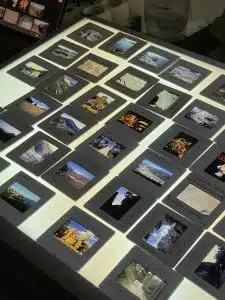
It is first to produce content from already existing photo and video. In the case of Abbe Photo, it is on Linkedin (www.linkedin.com/in/abbefrancois), Instagram (www.instagram.com/passadoc), Facebook (www.facebook.com/passadoc) or Youtube (www.youtube.com/@provenceheritage). We recycle texts, re-use photos, etc.
Reusing its archives for the event makes sense. For Abbe Photo, we have completed the Roquebrune Photo Festival 2026 (https://abbe.photo/festival-photo-roquebrune-2026-expo-3-photographers-62-ans-decart-meme-passion-pour-limage/) with 100% already existing content.
Telling new stories or creating new training materials for example makes sense!
So in the continuation of this article, we propose simple methods to stop systematically creating zero and thus reduce the budget (time, money) for communication as well as for training (these are in my opinion two main areas where audiovisual production is found in companies).
But not all uses of an archive are valid.
For example, the value is a stage rocket with low (value) up (very high value):
– Low value (at the bottom): free digital content on social networks Linkedin for pros (www.linkedin.com/in/abbefrancois), Instagram (www.instagram.com/passadoc) and Facebook (www.facebook.com/passadoc) for Provence and Youtube fans for an international French- and English-speaking audience (www.youtube.com/@provenceheritage) for example.
– Value: newsletters (e-mails remain the most profitable marketing content according to some sources that even measure ROI like this article) https://www.litmus.com/resources/email-marketing-roi)
– Value (just above): free physical content (postcards and posters, such as those made with BleuLemon described in the newsletter (https://abbe.photo/newsletter-raymond-depardon-pierre-colombert/)
– A lot of ephemeral value: events such as meetings (one evening) or photo exhibitions (a few days to several months); the place is important. For example, we are proud that the exhibition Femmes de Provence (https://abbe.photo/exposure-femmes-de-provence-d-andre-abbe/) took place just before the Robert Doisneau exhibition (https://www.ville-draguignan.fr/?p=95219). We also presented videos of interviews, film excerpts, etc. Again, our stock of content played a fundamental role.
– Paying B2C products: Roquebrune books in image (https://abbe.photo/product/book-roquebrune-en-images-la-vie-en-photos-dun-village-de-provence/) and Women of Provence (https://abbe.photo/product/book-photo-women-de-provence-andre-abbe/)
– Paid B2B products: one of the 4 numbered and signed photo prints, as selected by BleuLemon (www.bleulemon.fr)
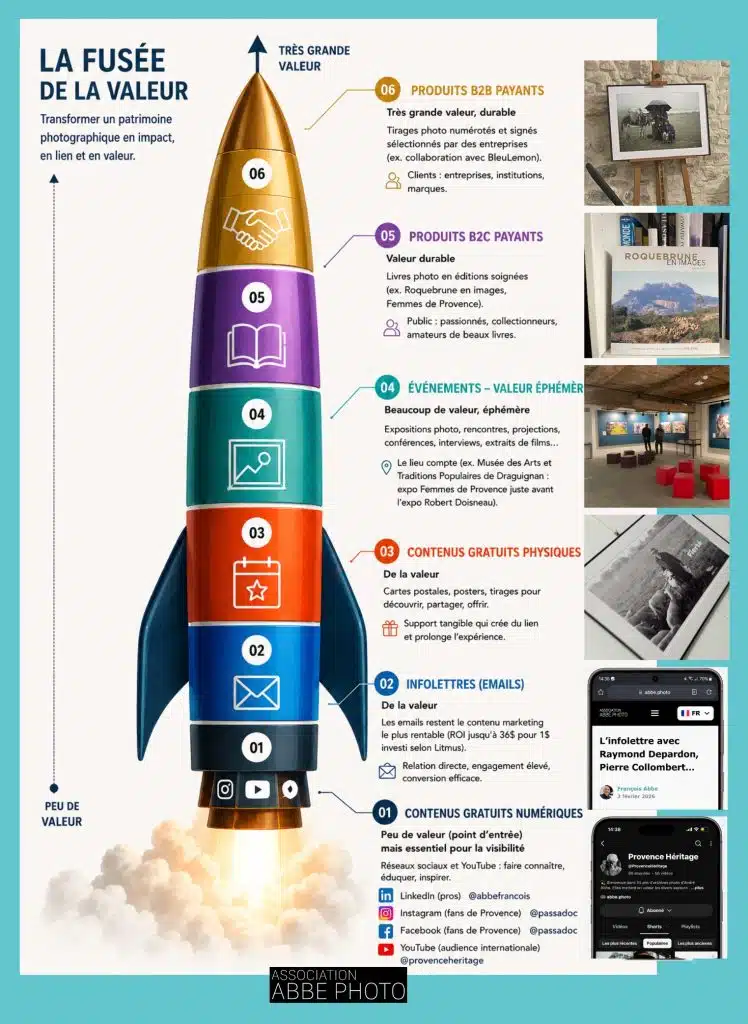
The true value of an archive is therefore not only in the file itself. It is in the number of uses that can still be drawn from it.
In conclusion: the company can create a range of communication or training content based in part on existing content.
Many companies rely on audiovisual content, yet audiovisual is not their core business. It remains to better value years of photos of events, demonstration videos, expert interviews, webinars, trainings, presentations, customer testimonials (by far the most valuable type of content), reports.
What investment did the production of these photos and videos represent? For what KING?
A company's marketing budget accounts for 7.7% of turnover, according to a Gartner study (https://www.gartner.com/en/newsroom/press-releases/2025-05-12-gartner-2025-cmo-pend-survey-reveals-marketing-budgets-have-flatlined-at-seven-percent-of-overall-company-revenue). So a company invests hundreds of thousands or even millions of euros a year in its marketing.
Yet much of its photo and video heritage is used only once before being forgotten! So our goal is to do better...
How much does this waste actually cost?
Before planning a new shoot or photo shoot, an inventory already makes it clear:
– Content that has never been used or only once
– Content that could be used in another context
– Content is still up to date
In 2006, we identified for a continuous news channel that 20% of the content broadcast came directly from the video archive.
What is the % content reuse in your company today? How many photos and videos sleep on your company's servers (or the Cloud)?
Companies often have a real editorial wealth... they don't know.
Make room: Why delete and sort your photo and video content is not enough?

One must keep in mind the added value for the end client (again a simple reader or internal user may be the client). This recipient of the communication wants value.
We need to produce new content for product launch
There is one variant: « We're starting this game when we get back to school. ».
Let's start by asking ourselves: what content do we already have in stock? One can lean on the archives and rework them (by hand, via an AI, both).
The first case of school is Abbe Photo. We manage one fund of more than 100,000 photos by André Abbe since the 1970s. For a long time, some images remained invisible. It was not a lack of interest (or value). But simply because they were not accessible.
We have put in place a conservation plan. Since 2014, we have digitized, documented, classified and republished them.
If your company has already digitized audio, photo or video content, the subject is the same: without metadata (what, which, when, where, etc.), it's looking for a needle in a haystack!
The results for Abbe Photo: 50-year-old photographs find today a new audience.
Preserving: Is your video or photo content really usable?
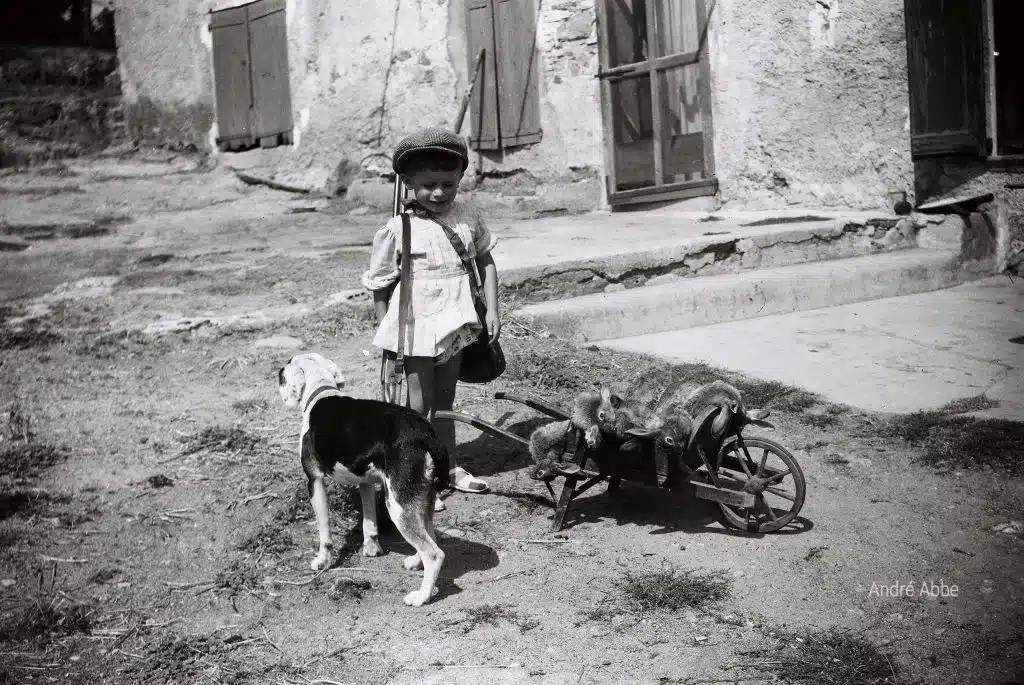
Nature hates emptiness! Many of us keep « in case ».
An anecdote: my father had kept hundreds of video rush tapes in the garage. A few years after he retired, he decided to throw a tape a day in the kitchen trash. The effort required to safeguard these content far exceeded the theoretical benefit of having access to these images, the content of which is difficult to evaluate.
After 12 years of abbe photo retreat, the biggest job is not to digitize the 100,000 photos (it's outsourced, it takes budget). Most of the effort has come to enrich these files with the basic information: where, who, when... And even why?
Thanks to this valuable information (metadata), your company can fully exploit this content (in the rocket floors).
This analogy speaks of itself: a video found without context is like a key box without a label. We know there's one that opens the right door. But what door?
Are storage or software tools critical to valuing a company's archives?
Storage and software tools are means. But the real subject is memory. The challenge is therefore to enrich these contents with the basic data to be able to find this content. Without it, it's not archiving but wastage!
In 2012, we defended a budget with the French Tennis Federation (FFT / Roland Garros) to acquire the foundations of a large computer system. The Board of Directors refused the investment. How can we defend such a computer budget today? By highlighting the proposed products, the added value for internal and external customers, ROI, etc.
Will your company still be able to open its photos in 20 years?
La préservation des archives numériques reste un sujet central. L’UNESCO nous alerte : « les documents audiovisuels ne survivront que quelques décennies, et la durée de vie des objets numériques ne dépasse pas dix ans en moyenne. » (https://www.unesco.org/fr/ifap/information-preservation)
Parce qu’il suffit de retrouver un vieux CD gravé ou une clé USB « très importante » pour comprendre que le temps ne fait pas que vieillir les fichiers… il les fait aussi disparaître. Ou bien les fichiers sont toujours là, mais plus personne ne sait ce que c’est.
L’enjeu demeure : pérenniser les photos et vidéos.
Préserver ne consiste donc pas à empiler des téraoctets. Préserver, c’est préparer les usages futurs. Justement, au-delà des deux types d’usages humains internes et externes classiques, il y a l’usage par les algorithmes (IA).
Nourrir l'IA : Comment préparer vos photos et vidéo pour l'IA ?

Imaginez simplement demander à une IA : « Retrouve la vidéo où notre fondateur explique notre vision. » ou « Quels sont tous les contenus que nous avons produits sur ce sujet ? »
Le problème, c’est que l’IA ne fait pas de miracles ! L’IA n’est pas capable d’interpréter que le fichier IMG_4837.jpg représente votre meilleur client. L’IA ignore que cette vidéo tournée il y a huit ans contient l’interview de votre fondateur.
Nos 100000 archives Abbe Photo sans date, sans lieu ou sans nom ressemblent à un album de famille dont toutes les légendes auraient disparu !
Dans les entreprises, c’est exactement la même chose. L’IA ne valorise pas vos contenus. Elle valorise les contenus qu’elle comprend.
On en revient à la nécessité d’obtenir ces métadonnées : Où ? Quand ? Qui ? Pourquoi ?
Donc avant de lancer un grand projet IA, posez-vous cette question : Vos contenus sont-ils prêts à lui répondre ?
Là encore, le choix d’un outil d’IA est secondaire. La priorité c’est d’être capable de lui fournir un jeu de données cohérent.
D’autre part, penser que l’IA va régler le problème de l’enrichissement en métadonnées est faux, voire dangereux !
Faites le test : avant de programmer une nouvelle séance photo ou un nouveau tournage à la rentrée, ouvrez un dossier de contenu au hasard. S’il n’y a aucune métadonnée (nom de dossier et de fichier, balises IPTC, etc.), alors il y a un chantier plus rentable que vous ne l’imaginez. 😉
Alors posez-vous la question : Quelle est l’archive la plus ancienne que votre entreprise est encore capable d’exploiter aujourd’hui ?
Automatiser : Quelle est la tâche la plus chronophage pour vos équipes ?

Une solution pour passer moins de temps sur ses contenus audiovisuels quand son vrai métier n’est pas l’audiovisuel : l’automatisation. Nous parlons volontairement d’automatisation et non d’IA car ce sont des tâches simples : renommer des fichiers, chercher un contenu, envoyer toujours le même document, reclasser des fichiers, dupliquer des métadonnées.
Chez Abbe Photo, chaque minute passée à chercher une information est une minute qui n’est pas consacrée à raconter une histoire autour de nos 100000 photos d’archive.
Le constat est le même dans toutes les entreprises. Il est donc nécessaire d’identifier les tâches absurdes qui font râler les collaborateurs, qui empêchent de produire plus. Ce sont de manière générale les plus faciles à automatiser.
Comment commencer simplement à automatiser des tâches répétitives ?
La logique est simple : identifier un irritant qui draine 80% du temps gaspillé pour seulement 20% de valeur (pareto!). Cette démarche permet entre autres de justifier (ROI) de s’intéresser aux archives audiovisuelles, de manière pragmatique.
L’automatisation n’a pas vocation à remplacer les équipes. Elle sert surtout à leur rendre le temps qu’elles perdaient sans même s’en rendre compte. Et ça, c’est un investissement qui rapporte dès le premier jour.
Conclusion : les clés de la vidéo et photo mieux et moins cher
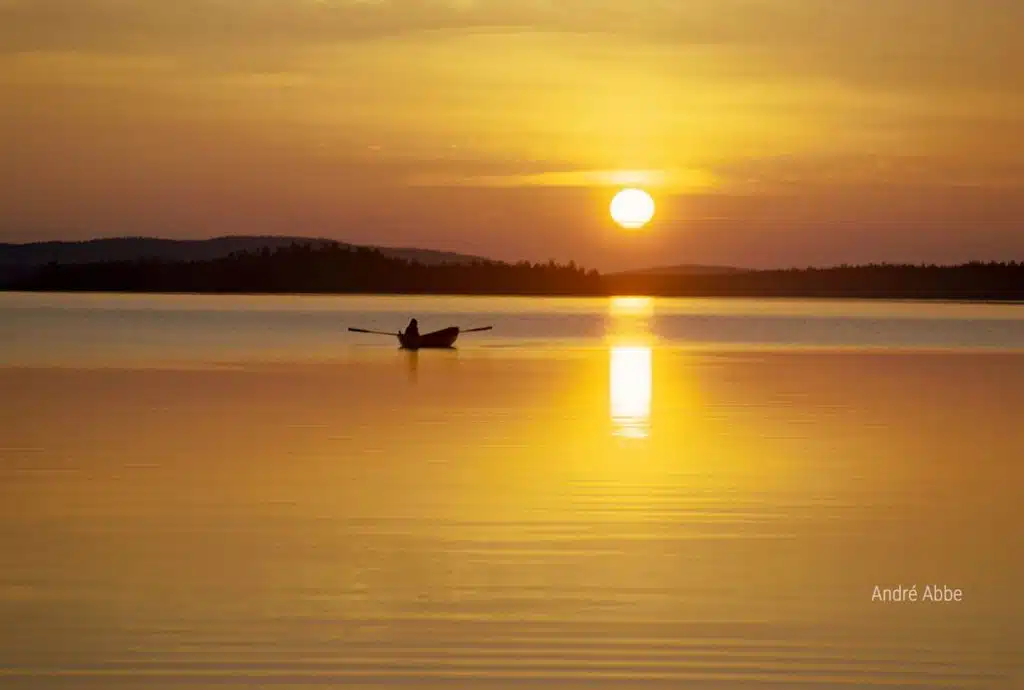
Réaliser des économies sur les contenus audiovisuels de manière intelligente ne consiste pas simplement à supprimer des fichiers. Il s’agit surtout de mieux utiliser ce qui existe déjà.
Donc en résumé, on va se poser la question : avant de dépenser pour produire image ou vidéo, quel contenu dort dans les archives numériques.
Vos archives sont une mine d’or. Mais comme dans toutes les mines, la clé c’est de trouver l’or !
Conclusion : par où commencer ?
A l’heure de l’agilité en entreprise, rappelons un des quatre préceptes du manifeste agile : Les individus et leurs interactions plus que les processus et les outils. Donc commencer pour changer de stockage ou d’outil est bien souvent l’approche prise en entreprise. Mais le sujet de fond subsiste : comment réaliser des économies et mieux valoriser les archives ? Si un outil pouvait répondre à ces deux besoins, ce serait formidable ! Mais non l’enjeu reste humain !
Pour conclure, l’étude du Boston Consulting Group (https://web-assets.bcg.com/a5/37/be4ddf26420e95aa7107a35aae8d/bcg-wheres-the-value-in-ai.pdf?src_trk=em67b6735fb0f155.105937271451277528) explique : « lorsque les entreprises s’engagent dans une transformation numérique ou liée à l’intelligence artificielle, elles doivent consacrer 70 % de leurs efforts et de leurs ressources aux compétences humaines, 20 % à la technologie et 10 % aux algorithmes. »
L’humain a de beaux jours devant lui, nos archives audiovisuelles aussi !
Pourquoi Abbe Photo est un allié puissant pour mieux valoriser ses contenus audiovisuels ?
Car depuis j’accompagne les groupes médias depuis plus de 20 ans. Aujourd’hui c’est ce même service qui est proposé aux entreprises dont l’audiovisuel n’est pas le cœur de métier : réduire les coûts et augmenter la valeur.
L’objectif est simple : aider les entreprises dont l’audiovisuel n’est pas le cœur de métier à réduire le coût de leurs productions et à augmenter la valeur des contenus qu’elles possèdent déjà.


