


The Hebdo 157
Words also travel...
Like men, words also travel.
Example: fada*.
From Latin fatigue (insensed), he stopped in Provence in 1343 and if he remained regional, he was known throughout France, thanks in particular to Marcel Pagnol** :
« That's why, when there comes a good action, all ready, in working order, right in front of your nose, is that the Good Lord offers it to you. Whoever doesn't jump on the footstool and goes hand in hand, it's a poor fad who missed the train.« .
Another example?
1870: from Brittany, the soldiers demanded bara (pain) and gwin (win) from their officers who understood nothing about this language. The war ended, the military returned to their province... but Baragouin*** Stay in towns and villages!
But how did homosapians, nomad hunters/gatherers, express themselves? Scientists agree enough that the exchanges were merely gestures, screams, whistles and expressive mimics, and that languages only formed during sedentarization.
To develop the topic, it would take hours and hours of research, pages and pages of gazette... We're not fedas enough for that!
Jeanne Monin
Research on several sites.
* Beyond Latin origin, « fada » means bewitched by the fairies. There is a female « Fadade » in popular French.
Found in the Tresor dóu Feliberge : parlo coume uno fado She has an enchanting language.
** Manon des Sources.
*** Nice story... but we find Barragouin as early as 1532 with the same hypothesis: meeting of bread and wine. The expression is taken from Rabelais who gives him the meaning of « person speaking incomprehensible language » – Source Alain Rey – Historical Dictionary of the French Language

- The Echoes of the Week
Barjols' triplets
The old tree
Yes! - Passadoc
Publications
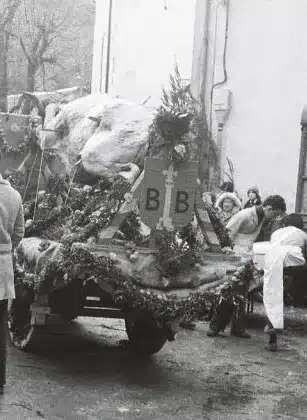
The Tripettes of Barjols
A moment of joy for the 3,000 inhabitants of this commune of Var.
Open this page quickly! Claude Boyer tells the story

The old tree
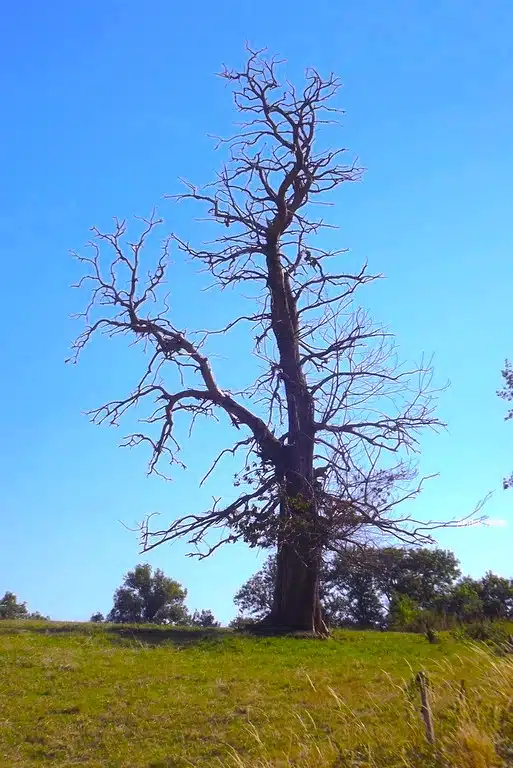
On a stroll through the Cantal, I had photographed this majestic tree that immediately made me think of Aubre Vielh (The Old Tree) by Marcèla Delpastre, a 20th century major poetic work in the Occitan language.
Yes!
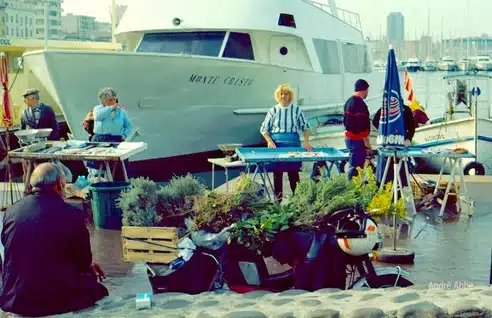
This is not the first time anyone has asked me why, in Provence, we say « Sies a peis » (You're a fish!) to a person who did a good job.

Publications


Rare format...
Everything is said on this page
- These are cited in The Gazette :
André Abbe
Claude Boyer
Jeanne Monin - Editor in Chief
Jeanne Monin