


The Hebdo 153
And if we get up...
... thanks to the stilts? They've been around the world for a long time! They are found in Asia, India, South America, Africa, Russia...
- In Greece, on jars dating from the sixth century B.C., are represented men using stilts.
- In ancient Rome, men « shoes » during theatrical performances.
- In Sri Lanka, they are used by fishermen... in Morocco or California, by fruit pickers.
- In Togo, we talk about almost dizzying, 5-6 meters high, which leaves some historians skeptical that it is not uncommon to see men evolve on stilts of 2 to 4 meters during festive demonstrations, which is already quite exceptional.
- In Belgium, the Namurese scavengers fight in battle (1411)... fighting that William II of Namur will hardly appreciate: he will forbid the practice of scoundrels to anyone over the age of 13 years under penalty of a fine and the confiscation of scoundrels.
- In France, they appear on engravings from the Middle Ages.
Louis XV entertained himself by watching perched men, fighting in teams, pushing his elbow and shoulder to unbalance himself.
They are mainly Landes. It must be said that on this side of Occitanie, about the seventeenth – eighteenth centuries, the land is wet, marshy, unfertile, only sheep and goats find it pittance. The stilts allow the shepherd – which is 1 m taller at 1.50 m – to monitor his flock, to spot the wolf so that he does not approach too close to the animals, and above all to locate the muddy areas so as not to venture there. The population considers him a little sorcerer...
The geographer Louis Papy* Makes his portrait: The Grande Lande pastre is specialized in sheep rearing. A landlord hired him for a year. He is responsible for feeding and treating his flock. His reward will consist of some money, a few bushels of rye and millet, a few hundred sardines, salt, a fleece.
Gradually, the drainage of the soil, the plantation of sea pines – prompted by Napoleon III in 1857 – will sanitize the Landes.
The shepherd on his stilts will have lived less than a century. Nevertheless, it has marked the culture of the Landes, perhaps thanks to the originality of its appearance. Today it is part of folklore and as such still present in parades, village festivals.
Jeanne Monin
Research on several sites.
* Text published in the Geographical review of the Pyrenees and South-West.
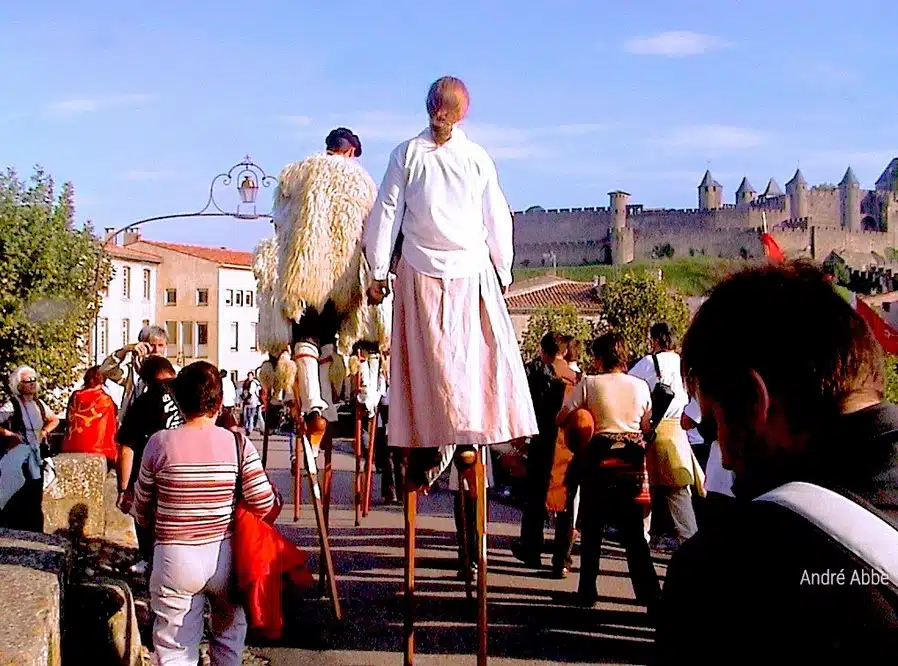

The last time I saw the Landes on their stilts was in 2005 in Carcassonne, on the occasion of a major event to promote the Occitan language in education, in the media.
What do we read on the flag? A translator's friend replied: " Overall it starts on November 22 and ends on December 7. It's part of the 21 Jiechi of the lunar calendar. "
Claude Boyer
In Mali, I saw Dogons on stilts.
The Dogon Country extends from the cliff of Bandia-gara to the southwest of the Niger loop.
Maryse Laugier
Well, I tried a long time ago. Get on stilts! I let you imagine...

- The Echoes of the Week
The shepherdess
On 21 December
25 December
Quiz! - Passadoc
Women of Provence
The shepherdess
The dawn of 21 December

And the days will start to lengthen because In Sainte-Luce, the days grow from the jump of a chip.
Marquise, if my face
A few old traits,
Remember that at my age
You won't be much better.
Time for the most beautiful things
Please make an affront,
And will fade your roses
How he wrinkled my forehead.
The same course of planets
Rules our days and nights:
They saw what you are;
You'll be who I am.
Tristan Bernard (1866-1947) will not be any further! Humorist, facetious, he adds this quatrain:
Maybe I'll be old,
Answer Marquise, however
I'm twenty-six, old Cornelius,
And fuck me in the meantime.
A few years later, in 1962, for our greatest pleasure, the malicious Georges Brassens will put all this into music! Listen...

Thanks.
Pierre Blanc
Guy Bouyer
Marie Dominique Germain
Maryse Laugier
Elise Savine
Cyril R. Vergnaud
for their good wishes to Passadoc!
Thanks. Claude Boyer and Giselle Penat-Lorde who also spoke:
Buon nouve a tutti tamben and vespre question oblidan not ...
Cacho fio, toto fio
Algebra, Algebra Dièu alegre us
Calèndo vèn, every ven ben
We're being given the grace to be sure that we're ready.
And nanny sian not May, that nanny rungue not lie
Christmas log, give fire
Let us rejoice
God gives us joy, everything comes well
God gives us the grace to see the coming year.
And that, if we are no more, we are no less.
Quiz!

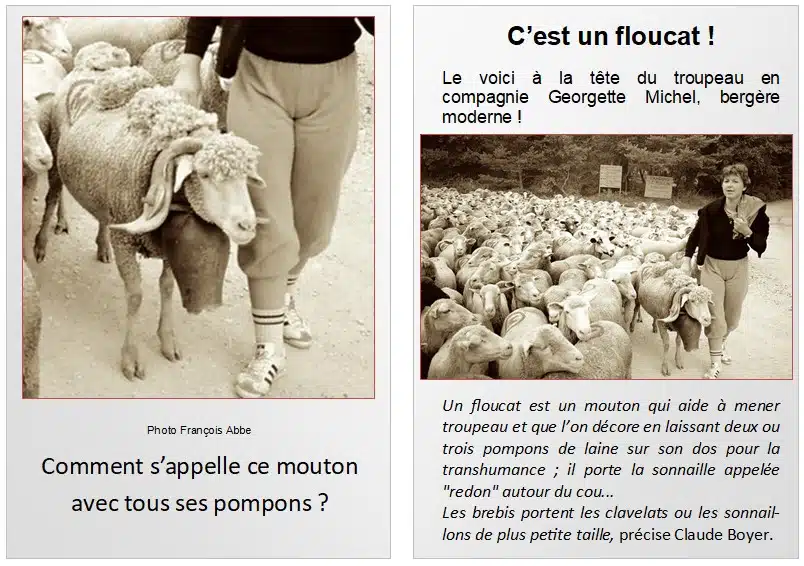
The fuzzy cat: André Abbe explains to the children...

Women of Provence
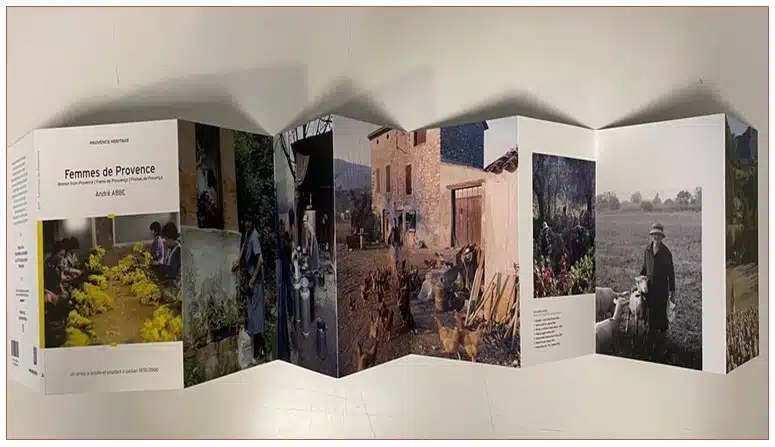

Delivery within 48 hours
- These are cited in The Gazette :
André Abbe
François Abbe
Claude Boyer
Maryse Laugier
Jeanne Monin - Editor in Chief
Jeanne Monin