


The weekly 139
The garlic? ... ouch... ouch... ouch!!!
Garlic is apparently the sovereign remedy for hunting vampires, not bats but the True Vampires! Those who – big black cape, blabar complexion and sharp canines – travel only at night and feed on human blood!
Nothing frightens them except the sun... And garlic!
In the Middle Ages and in the following centuries, it is believed so strongly that in some villages the entrance stone of the houses is rubbed and a few cloves of garlic are subreptitiously slipped into the mouth of the deceased; So they will not come back to bother the living!
But this belief would come from much further: cloves were found in Tutankhamon's tomb; It was then a miracle food capable of curing many diseases and protecting children from the evil ones.
In outbreaks of rabies, patients were found to become hypersensitive to garlic and light. Some wondered if Dracula would not have been a mere mortal, just a victim of rage!
– Where are our garlic braids?
Patience... They're coming... Here they are in so many that there is enough to hunt all vampires from the Occitan!!! And above all, they are ready to perfume all the aioli of Provence!
Jeanne Monin
Research on several sites.
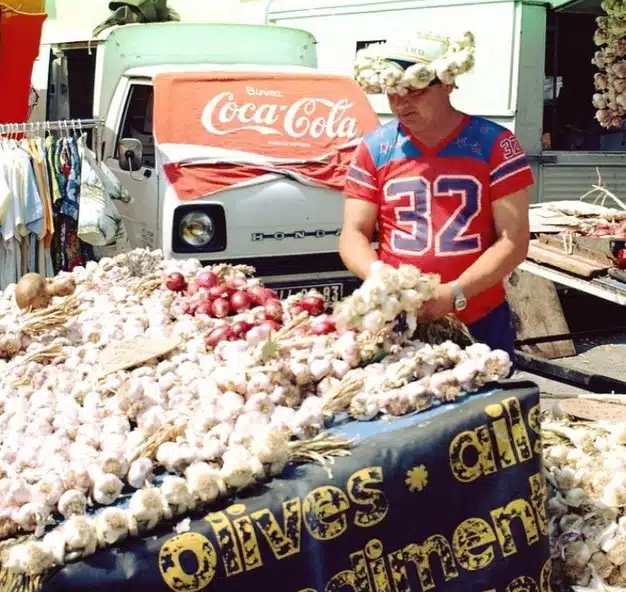
The markets are a feast for the senses...
- The Echoes of the Week
The bladeturk
One « body » Flying!
The secret of lo sausson... - Passadoc
The bladeturk
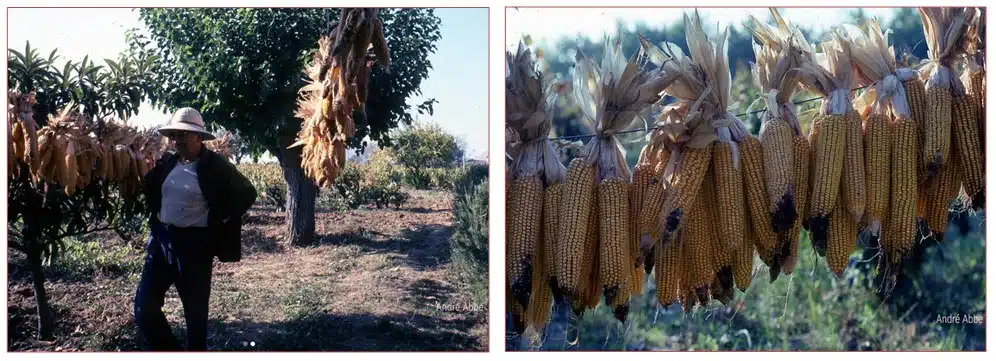
A flying cash!

It is not unusual to see helicopters and private jets flying over the cities, the beaches of the French Riviera.
What is more surprising is to see this « body » cork fly from the forest to the factory!
François Abbe
– The photo is 25. I'd like to know if it's still practiced!
Maryse Laugier
– No idea... I've never seen this before!
Jean-Paul Tinois
– At the Môle, at the Siouvette estate: they participate in the recovery of the cork industry.
The secret of lo sausson...
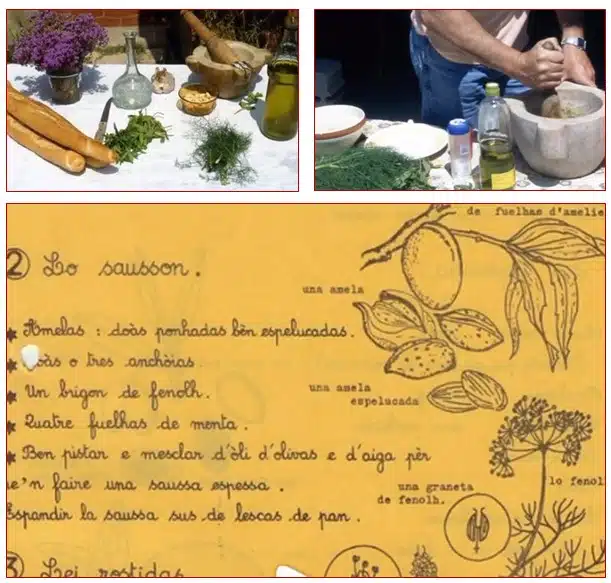
Tropezian pie... Pistou soup... Of course... specialties of southern France.
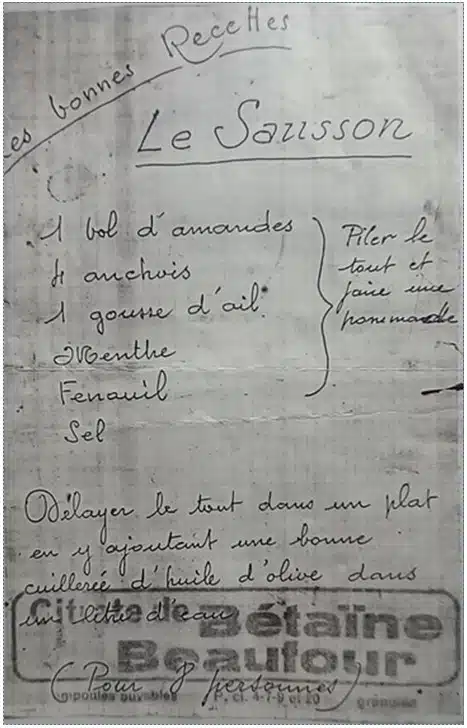
Among them, native to the heart of Provence, a classic spread – lo sausson! – that was eaten on large slices of bread when farmers paused in the fields. Here's a secret recipe!
Claude Boyer reacts:
– No « South » France... Please, if we lose this habit, it doesn't mean anything... « Provencal specialities » point.
Saint-Jean-de-Luz is at « South » and there we don't know what the aioli or the saussoun is; On the other hand, we taste delicious ttoro (pronounce tioro) and summer we celebrate around a zikiro while sipping an Irouleguy.
The Gascony is at « South » and we enjoy foie gras, duck needles in the morillae and magret.
Each region of France has its charms, it is normal that each native of these regions claims his identity, see no chauvinism in this intervention; But like André Abbe, I am insurgent against this name. « South »... I'm Provençal and not Southern...
- Holà! May your majesty not get angry! pleasant Jeanne Monin.
« … lose this habit that means nothing« Maybe I'll talk about the South...
« All the French Midi were there, in its various nuances: Midi gascon, Midi Provençal, Bordeaux, Toulouse, Marseille, Midi Perigourdin, Auvergnat, Ariégeois, Ardechis, Pyrenean... »
Memories of my childhood.
Meals « land workers » during the lunch break. I loved it, just like the anchoyad on rainy days...


- Writing Passadoc – Participants included:
André Abbe
François Abbe
Claude Boyer
Maryse Laugier
Jeanne Monin
Gisèle Penat-Lorde
Jean-Paul Tinois - Layout
Jeanne Monin