


.
.

- We talk a little, a lot, passionately!
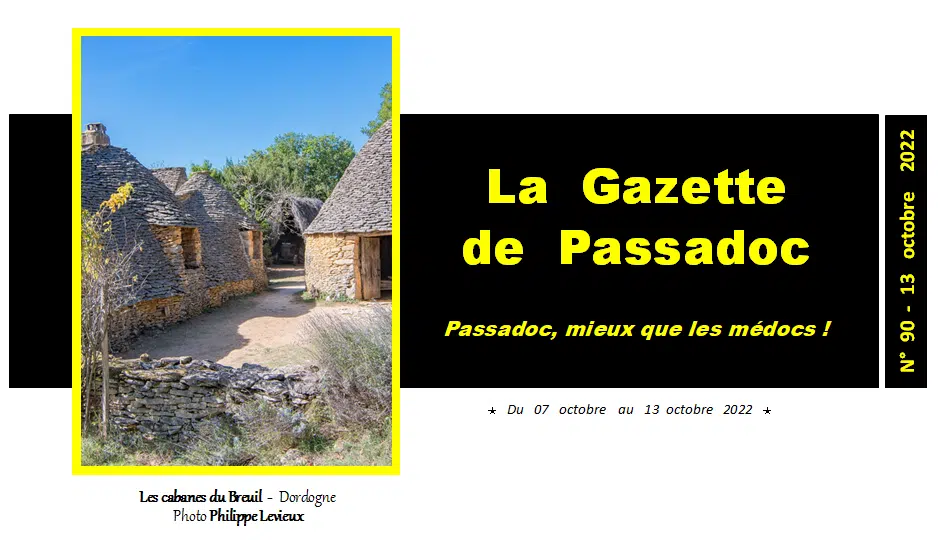
Breuil's cabins... Mugel Park... In Bibémus... Draguignan - Some images here, besides, a little further...
- From Abbe's side.
Menoun and Floucat... Gilles Brémond... Peasant common sense! - The Library of Passadoc
.

.
Philippe Levieux
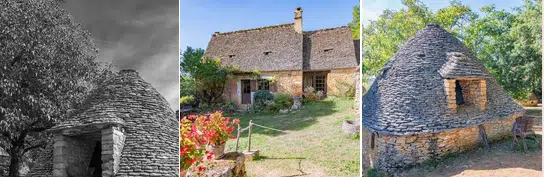
The cabins of the Breuil
They are located in the commune of Saint-André-d的Allas, halfway between Sarlat and Les Eyzies.
The origin of these huts remains mysterious but they were the rural habitat of the Benedictine monks of Sarlat until XVe century. In XVIIIe and XIXe centuries, they serve as craft workshops. The largest concentration of dry stone bories is backed by the 1841 farm.
Since 1949 this heritage has been preserved on a family farm of 15 hectares still in operation. It was the family of successive owners who undertook to save this heritage by rebuilding these huts. The property has been recognized as a historic site since 1968 and has been listed as a historic monument since 1995.
Cinema and television have made the huts famous because they have been used as a setting for the films, La Belle au Bois Dormant, Jacquou le croquant, d'Artagnan, Les Misérables.
Several activities are proposed on the site including dry stone construction technique. The farm also makes its flour bread of wheat and spelt and cooks it in the wood oven about once a month.
Clichés Ph. Levieux – September 18, 2022.
.
Patricia Tritiapat Gueirard
Mugel Park – La Ciotat
It's an extraordinary garden... In the alleys, there are no ducks who speak English*, but chestnuts, cork oaks and many varieties of plants that form a palm grove, a rose garden, an orange grove, cactia and a bamboo grove.
Formerly private property, the park is now developed and maintained by the municipality of Ciotat; it is classified « Remarkable garden ».
A path leads to the large gazebo located 82 meters above the sea.
*As in Charles Trenet's song!
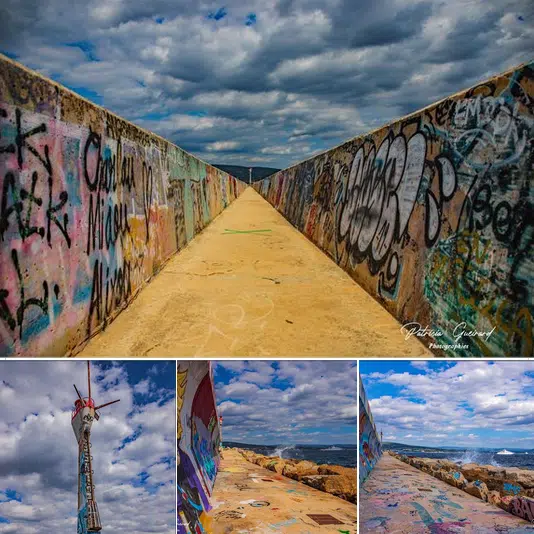
Graffitis in Mugel Park
« At the tip of the gulf, three huge rocks rise without bases on the waves;
of strange shapes, rounded like stones, polished by the wave and storms, these stones are
Mountains: gigantic games of a primitive ocean whose seas are probably only a weak image ».
Alphonse de Lamartine
.
Alain Cathala
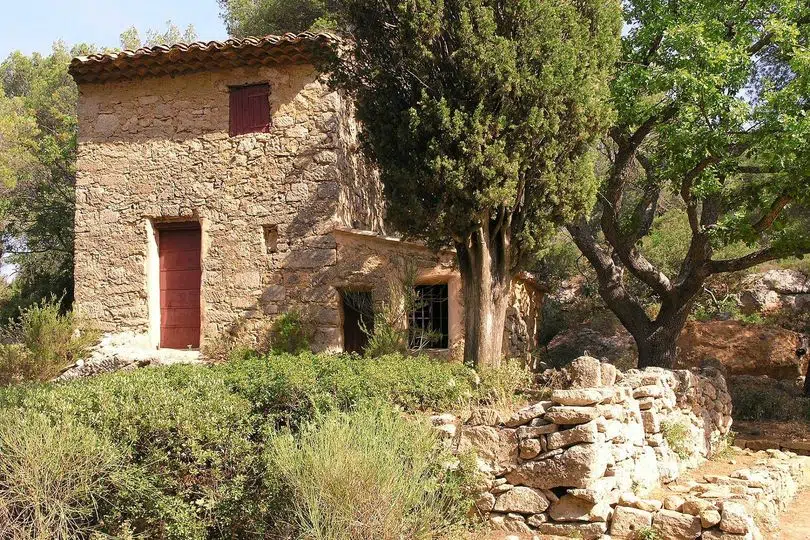
In Bibémus near Aix-en-Provence.
In winter, Cézanne lives in Paris but in summer, he prefers the south that he painted so much: The Gulf of Marseille, And of course The Montagne Sainte-Victoire, painted more than 80 times : « I always go back to this: the painter must devote himself entirely to the study of nature, and try to produce paintings that are a teaching. »
In the summer, he rents this cabin in which he stores his painting material: easels, color boxes, canvases, etc. Sometimes he sleeps there.
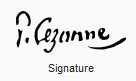
« Cezanne »... We usually write with a « e » High emphasis, especially in the north, because in the south neither civil status nor notarial acts use accentuation; so sign the painter.
.
Philippe Natalini
Draguignan
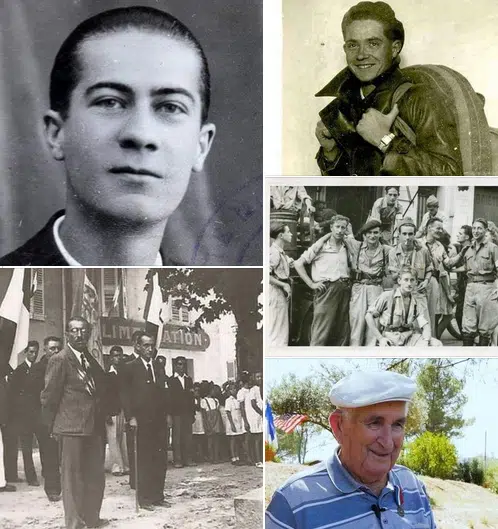
1944... Draguignan's release committee decides to liquidate two Gestapo men. The targets designated are two zealous militiamen, Marcel Massiach and Julien Viard.
These are young men, of the same age as the maquisards (one of them had even been refractory to the STO), little thugs, long spotted in their expeditions to Draguignan and in the communes of the district, working zealously and cruelly in the service of the local Gestapo against the resistors.
The Var resistance therefore attempted to execute these two individuals in the Arcs on May 10, 1944. The case is entrusted to André Charrier, Jean Cassou, and André Bigel of the ASA des Arcs. Their mission is partially successful because one of the two targets, Massiah, is very seriously injured.
During this operation, one of the resistors involved, young Lorrain André Bigel was seriously injured. He, hidden and cared for by neighbouring farmers, the Guidos, was discovered and arrested by the Gestapo on May 11, 1944. The tenant farmers and another peasant, the old Italian anti-fascist activist, Vermiglio (who will be tortured and will die in deportation), are also arrested.
A few days later, the Dracene Resistance decided to get Bigel out of the hospital where he was treated. The case is carefully prepared by several speakers, including: Commander Jean-Marie Blanc, Chief FFI of the Arcs, who has just entered underground because wanted by the Germans, Doctor Angelin German, and the head guard of the Drachen prison, Mr Veyret.
This operation was carried out on 2 June 1944 by employing various resistors belonging to different local groups. It involved the help of several resistors of the Dracene sector, among others: Hélène Massonnat, also a member of the F2 network, Angelin Clair who will host the convalescent, two men of the maquis Vallier, Dr Gayrard who cares for Bigel, and also three resistors of La Motte (André Bauchieres, Maurice Michel and Jules Castellan). This list gives an idea of the amount of complicity and connivances involved in each action.
It also appears that men from Maquis Vallier are there to protect the operation, monitor the two gestapists and prevent them from intervening.
Finally, André Bigel will be exfiltrated without encumbering.
When they were released, Massiah and Viard were arrested, sentenced to death by the Draguignan Court of Justice on October 05, 1944, and shot on October 07, 1944.
.

Claude Boyer
.
.
Gilles Barattini
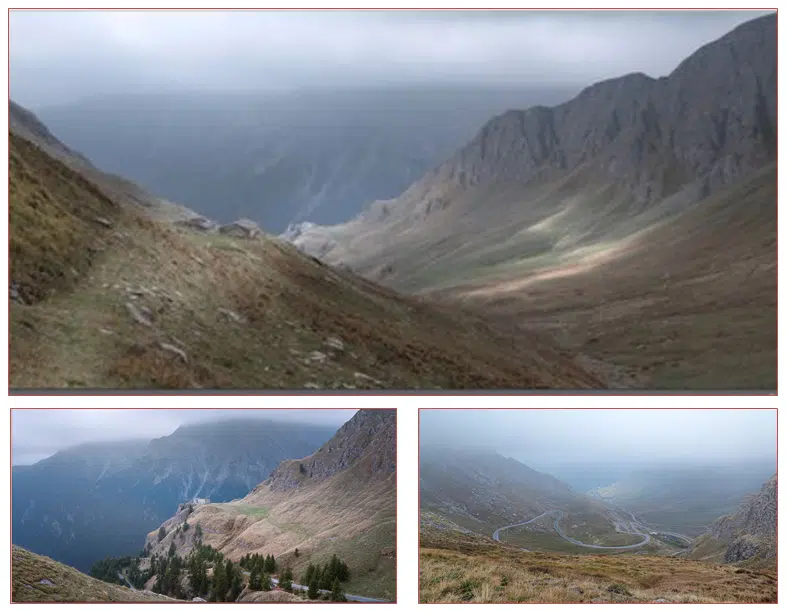
Val Varaita
.
Andre Abbe
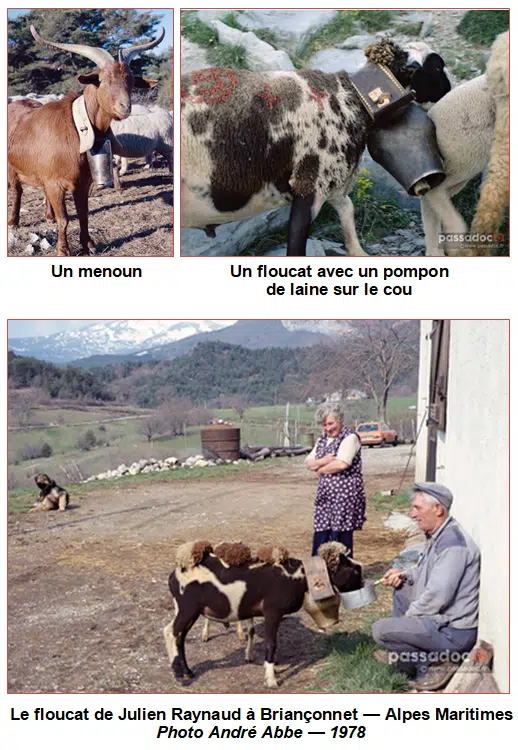
No! A symbol of virility, the ram must not wear a bell in Provence. She is carried, during the transhumance on foot, to a castrated lamb that has become adult and is called « Cadet » or « blurredcat »Depending on the location. Hence the confusion; We take the fuzzy thing for a ram. When mowing, he is left with enough wool to form two or three decorative pommons on his back. « Flakes ».
The biggest bells, the « reedun » or « pico » may also be carried by goats called « Menoun ». The smaller bells are carried by solid sheep.
Arriving on the pastures, the shepherds remove all the big bells and most of the little ones from the necks of the animals. They leave only a few of them to detect the presence of the herd through sound.
.
Gilles Brémond…
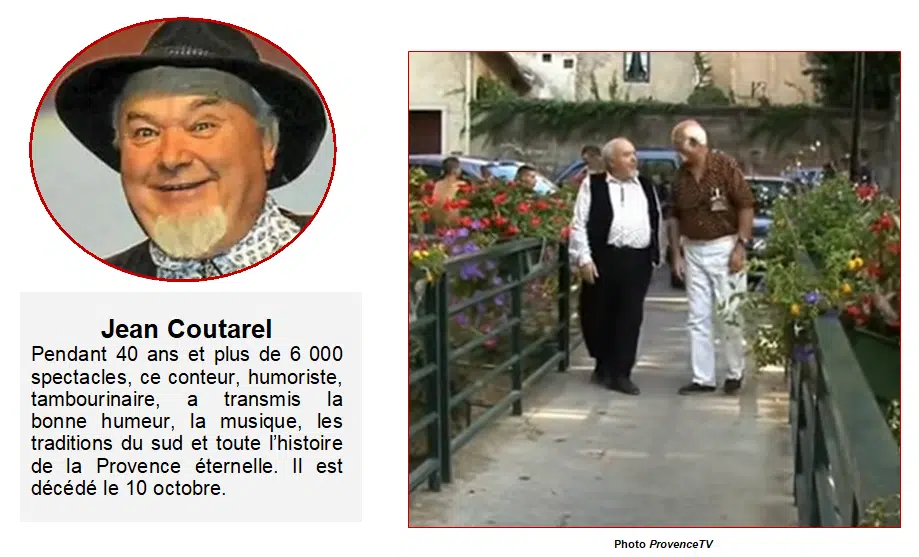
Grower in Bargeme (Var), Gilles left us. I had the chance to accompany him in transhumance several times with Martine and Bernard Bellini of the Michel family. His kindness and humour (bilingual Provencal-French!) made the atmosphere joyous within our team.
He had been a brilliant guest of the Provencal magazine « Vaqui », 30 years ago at the bridge of La Serre (04) which closed a week of broadcasts « 12 noon 3 », dedicated to the return of the transhumant flock to Châteauvieux (Var). Viewers still talk about it. Transhumance will continue without him.
Farewell Gilles, our friend, and Loungo Mai.
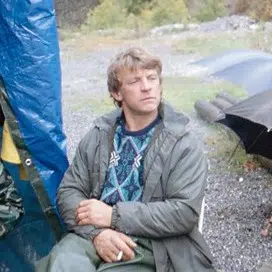
« The dead don't really leave this world as long as there's at least one person left to remember them, to talk about them« .
Andre talks about Gilbert... and the proud shepherd is there, in the breath of a cloud, somewhere in Provence.
Twenty-five comments accompanied this photo :
Farewell, friend... Your sincere condolences to the family... It was a pillar of Bargemus… Rest in peace...
.
François Abbe
Peasant common sense
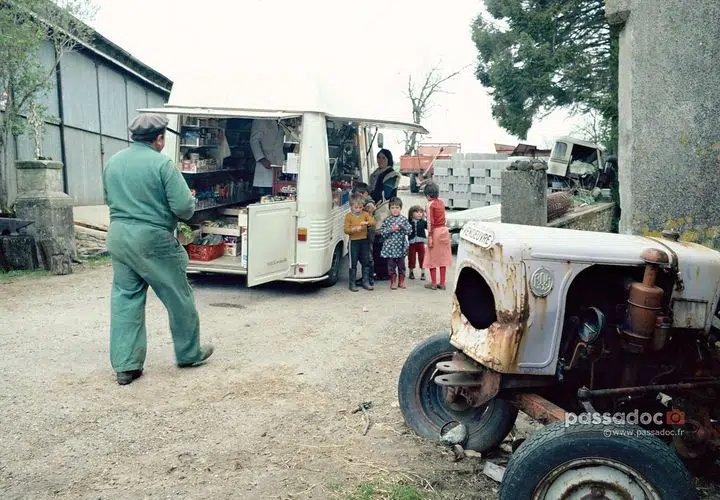
[...] When I saw this photo, I understood: the 4e industrial revolution (Internet, artificial intelligence,...) disconnects us from the real world. And with the real marketing layer, we're at the top.
Little anecdote that a VTC driver tells me: he had an accident with his electric car, the garage controls the detached part. Shanghai then the United States before arriving in France... Four months later!
So when I see this 1987 photo of my father Andre, the estafette that delivers home, the antediluvian tractor, I think of this poor driver...
.

.


.
.
.
.