


The Hebdo 192
Silence...
Everything's quiet, quiet... Sometimes a breath of air gently shakes the cherry leaves... From time to time, the rustling of wings of a pressed fly disturbs the silence... It's nap time.

And for this rest period, what better than a chaise longue?
She appeared in the modest gardens at the same time as the paid holidays of 1936. Previously, the luxurious « day bed » Only in the bourgeois salons.
In fact, this bed is a deep, comfortable, upholstered chair, covered with more or less luxurious fabric; The seat is stretched so that the legs can be extended. Depending on the times, it is called « Duchess », « light », « meridian », « Recamier ».
With the first transatlantic crossings, the « rest bed » Go get some air... and meet on decks. It will also change its name: here it is « transat » And it accompanies the fashion of sunbathing. The « Designers » will work forms, use various materials (wood, metal, bamboo, wicker, resin); Little by little, this summer furniture will democratize; Today, it is everywhere in campsites, on the beaches and of course in the gardens!
Jeanne Monin
Research on various sites.
Noelie Rebuffel Huys
– Very nice picture. The rest of the elders was rare... And the chaise longue even more.
Kristel Schwartz Lions
– A little penequet!
[Provencal: a short nap]
Marie-Dominique Germain
– Who doesn't know stuck his finger in those deck chairs...
– Yvan Audouard claimed that « in Provence, the sun rises twice, in the morning and after the nap ».
– ♫♪♫♪ Maybe today, or tomorrow.
This damn sun gives me the flemmer ♪♪♫♪♪

- The Echoes of the Week
Autumn
In the centre of the village
Reflects
Venice
The Fog - Passadoc
The peis and lo predictor
Autumn

Maryse Laugier
Ah! grilled chestnuts in the holed stove on the embers of the fireplace! What a memory...
And all the derivatives: brown cream, frozen browns...
The castaners that run along the highway where there is now LIDL, and especially the Thalgo cosmetics that had bought lifespans ... while they lived for a long time to the Savines sisters, chapelières of their state in Roquebrune.
Do they have anything to do with the chestnut? I've got a crazy problem finding one on the internet; We're talking about fighting, castagna, but nothing on the chestnut.
In the centre of the village
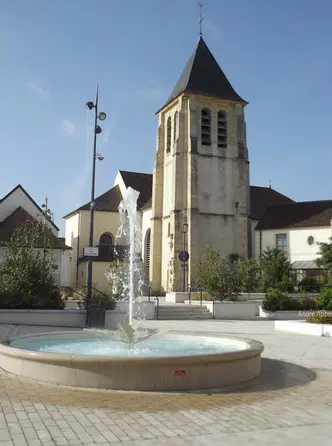
Exchanges to smile between Claude Boyer and Jeanne Monin
Claude
Do you know that Mr. Seguin's goat grazed grass from the fields surrounding Draveil where Alphonse Daudet owned a house?
Jeanne
I heard she was pretty... They say she had a non-commissioned officer's beard! Amazing for a goat, isn't it?
Claude
Back then, Even in Esonne, there were big bad wolves...
Wild wolves... You have no idea!
And thanks to Albert Vidalie, Georges Brassens, Jean de La Fontaine... And Alphonse Daudet of course!
Reflections...


Photos André Abbe... Beautiful!
Venice
André Abbe
In 2024, access to Venice became paid. Cheap, 5 euros, and not paying for everyone, only for those who come for the day.

Jean-Philippe Tinois
In hotels we pay a tourist tax... To park in Saint-Raphael, we pay the parking lot...
Not long ago to go to Guinea-Bissau, you had to have a visa paid in cash!! By going through an organization that makes the démarches in Paris because only one embassy in France – even for this kind of transaction that seems to be official – it was imposed an untraceable payment; It seemed improbable to me, but it was there, before my eyes, the racket is everywhere...
The other day, going for Regusse to eat at a friend who runs a restaurant, I pushed to the waterfall of Sillans. Surprise! You have to pay to go see her! I passed my way of rage... The argument always given officially is that parking times must be limited, roads must be maintained, etc. I think the only argument is that the recreational sheep mowing her needs or weaknesses.
Yes, I'll calm down, I promise!
The Fog

Claude Boyer
Remember... Once the material was loaded in the Juvafour, my grandfather took the soup to Saint-Aygulf

Lo peis e lo predictor

Cited in The Gazette :
André Abbe – François Abbe – Claude Boyer – Marie-Dominique Germain – Maryse Laugier – Jeanne Monin – Noelie Rebuffel Huys – Kristel Schwartz – Jean-Philippe Tinois.
REditor-in-Chief :
Jeanne Monin

