


The weekly 166
The beautiful stories of Passadoc!
They are told by André, Claude, Denis, Patricia, Jean-Yves, Martha and many others! Stories from Provence or Aquitaine, stories from Occitanie! Legends, austere adventures, smiling stories... There are dozens and dozens! Thus:

- The Echoes of the Week
Quiz!
In the Var
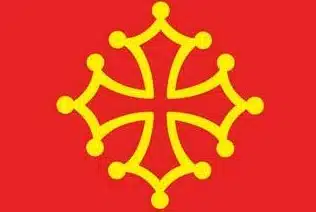
The Occitane Cross
Born on Alpe - Passadoc
Quiz!

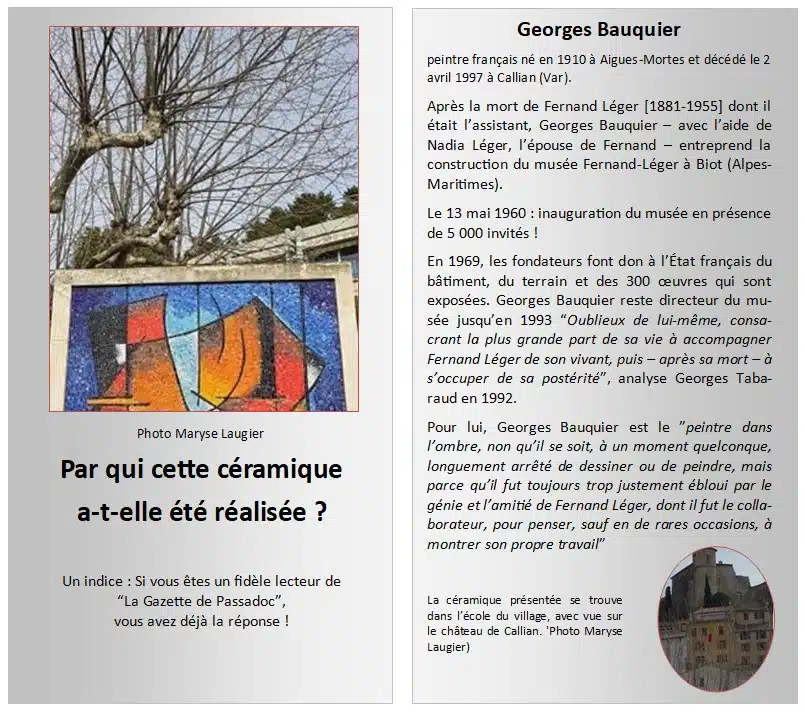
In the Var...
The Var... The population has more than doubled in 60 years.
– Have we made so many babies? ?
– Of course not! smile François Abbe. If some families have been settled in Provence for one or two hundred years, others have arrived much more recently, coming from everywhere! My mother was from Lorraine... and then she met my father; Half my mother's family followed!
Some even crossed the Atlantic to settle in the Var; George Clooney, now owner of Brignoles; He "expressed his willingness to finance a sustainable agricultural project, aimed at providing fruit and vegetables to local schools".
In a few decades, Clooney will talk about Master Panisse!
The Occitane Cross
An article that has generated some 80 comments – some of which are not being transcribed here –
514 shares and more than 930 « Blue inch » or « Heart » Hey!
The Cansoun of the Coupon,
performed for the first time by Fréderic Mistral
30 July 1867
Gregory Thomas
Cross of Languedoc is fairer. Languedoc is an ancient and well-established administrative, geographical and historical entity.
The alleged « Occitanie » is mainly a linguistic area bringing together all the patois and other speakers of the language of Oc which corresponds to a southern half of France plus one or two valleys to the marches of Spain and Italy. Occitanie is constantly invented and reinvented according to the opportune interests of linguists or politicians most often Toulouse.
Jean-Pierre Moulard
[...] Language speakers are called d « occitan » Because it is a language, vocabulary and grammar are common, pronunciations vary from place to place and a few words are common only in a given area, which is normal for a language that was mostly spoken. As for the cross, the wikipedia article from which this post is drawn is much more complete.
Nicolas Polge
13th to 18th century, to translate Languagedoc in Latin, we write Occitania... Thus, for example, on the marble plate affixed to the Pont du Gard to commemorate its repair and addition of a road bridge by the states of Languedoc.
In addition, the name of the province of Languedoc designates, when it appears, after the fiefs of the Count of Toulouse and some other southern lords are incorporated into the royal domain, the territories of this domain in which one speaks the díoc language, so called by Dante to distinguish it from the d ́oil language and the si language.
Thus there is the same semantic origin of the two names of Languedoc and Occitanie, whose application in the territory is much wider for the second because it is not confined within the narrow limits of the royal domain of the late 13th century.
Beatrice Dejean
I was around my neck, in a red earth coat of arms from us and on the plates of my car, which is red and black.
Besides, I'm not chauvin... No, no, not at all!
[...] the meaning of the 12 balls at the end of each point of the branches of the cross is missing. They're not here for decorating. Each one represents something specific...
Many sites tell the story of this Occitan cross, its long journey through the centuries. Many assumptions are made, including: « The Cross of Languedoc, Toulouse and Provence could therefore have been brought back from the Orient by the Wisigoths* who had adopted it when they became Christians and who might have implanted it in Languedoc and transmitted it to Provence and then to the Counts of Toulouse ».
* Year 330.
Born on the alp...
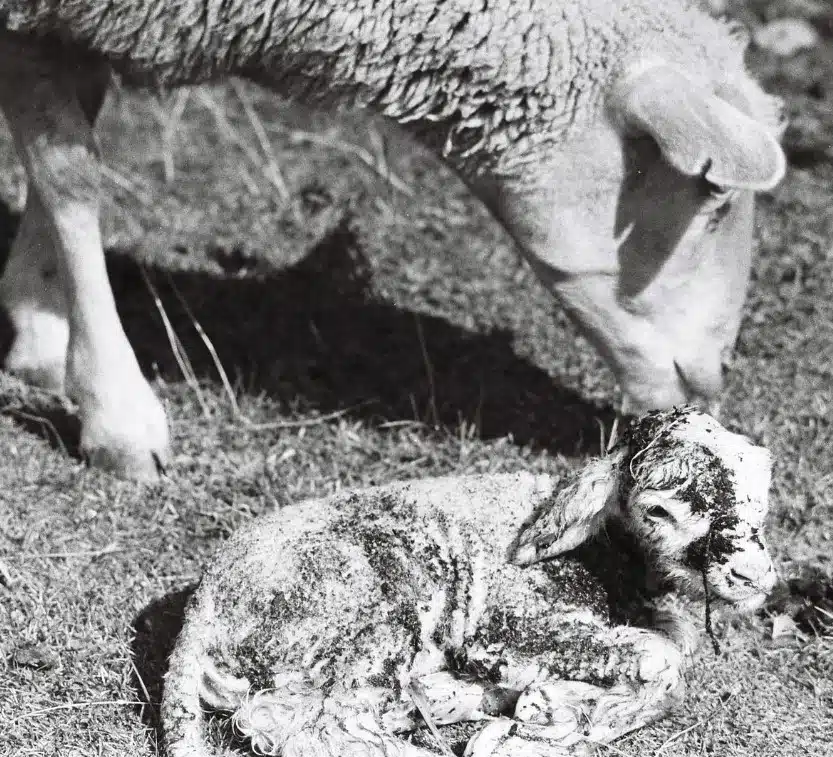

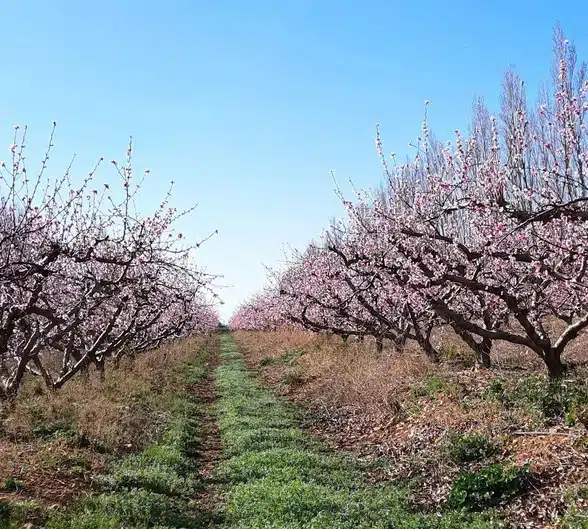
On the side of Fontvieille... a spring photo sent by Pascal Le Chevalier who lives in Marseille.
If you too have memories, images to share, send them to Claude Boyer →
romenzo2010@gmail.com

- Cited in The Gazette
François Abbe
Christine Giraud
Patricia Jouve
Maryse Laugier (Quiz)
Pascal Le Chevalier (Photo)
Jean-Pierre Moulard
Nicolas Polge
Gregory Thomas - Editor in Chief
Jeanne Monin