


Hebdo 161
Cheers!
Wine...
It all starts with Noah... After 40 days of diluvian rain and more than a year of wandering over the waves, he finally treads a land wet and soft * as Hugo says*, and plant a vine, sign of peace and harmony in a connection with the earth, based on work, humility and simple joys**.
According to the Bible, the vine is the first plant planted by man; a plant that will grow and grow on all the lands of the planet and therefore in different climates. Over the centuries, the work of men – the selection of soils, the size of vines, the method of vinification, etc. – will create wines of different qualities.
In Pompeii, on the wall of a tavern we read:
For one, you can drink wine,
For two, you can drink the best
For four you can drink falernum.
... by the name of one of the great crus of that time.
[« For one, » ace, i.e. 1/4 of sesterce).
If wine is glorified by many writers and poets, it is honored by Joseph Pagnol, Marcel's father! For the teacher, who was a student of the École Normale in Aix-en-Provence, The view of a glass of wine gives him chills of disgust!***
This is not the case with Colette; Loveful wine, she knows the biggest and most discreet wines. Very young she discovers Jurançon: This is where I made, a teenager, the meeting of a fiery, imperious, treacherous prince like all the great deceivers: the Jurançon. It also entrusts: I've had the finest of the paternal cellar, bucket bucket, delicately.
Baudelaire, who drank more than reason, gave this advice: Get drunk without truce! But what? Wine, poetry, or virtue as you please, but get drunk! Listen:
Brassens the Setois also advised wine!
When you're a wise man
And that we've got some drinking knowledge.
We're in custody.
In case of thirst, a pear
Research on several sites.
* Booz sleeping – The Legend of the Centuries – 1859
** Marc Paitier : General of the French army and fine wine connoisseur.
*** My father's Glory – Marcel Pagnol – 1957.
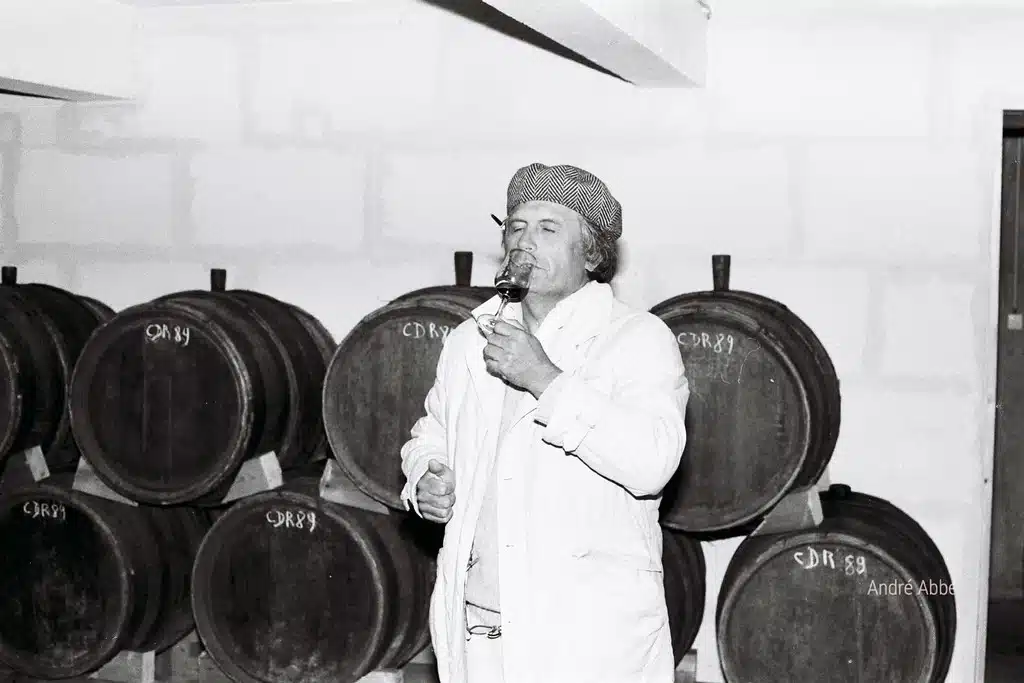
– Well... It's beautiful all this... But where is our winemaker?
Patience... here he is!
Jeanne Monin
Fishing port
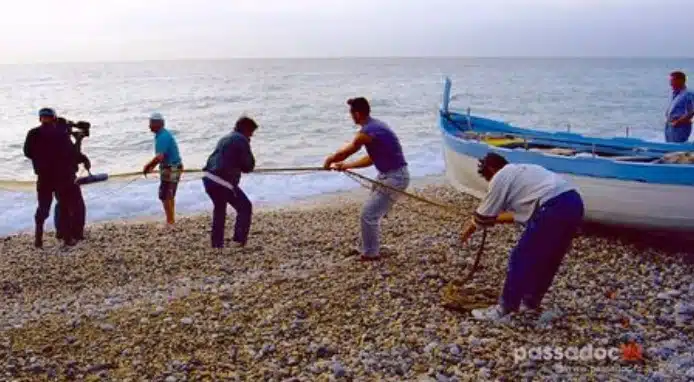
Did you know that? There are now 21 fishing ports on the French Riviera. In 1993, there were only three traditional net fishing sites, where men draw nets from the beach.
André Abbe took this photo during the shooting with France TV in 1993. How many are left today?
François Abbe
Ah! Lavender!

But by the way, what is the difference between lavender (here in the picture) and lavender?
Lavender grows at altitude, and lavender hybrids used in Valensole do not make pollen. What has the unfortunate consequence
to weaken hives that rise in transhumance pollen being
essential for the birth of new bees. I leave aside my thoughts on human motivations.
The lavender is a hybrid unlike true lavender, color differences too. Lots of lavender varieties.
They don't have the same virtues... and are different too... But I like lavender... Even if the thin lavender deserves to grow at 1,000 m... Dear!


- These are cited in The Gazette :
André Abbe
François Abbe
Saint-Antoine Asso
Jeanne Monin
Giselle Penat-Lorde
Alain Santinelli
Jean Philippe Tinois - Editor in Chief :
Jeanne Monin