Passadoc Gazette – No 149

The weekly 149

The Arlesian...

Photos André Abbe

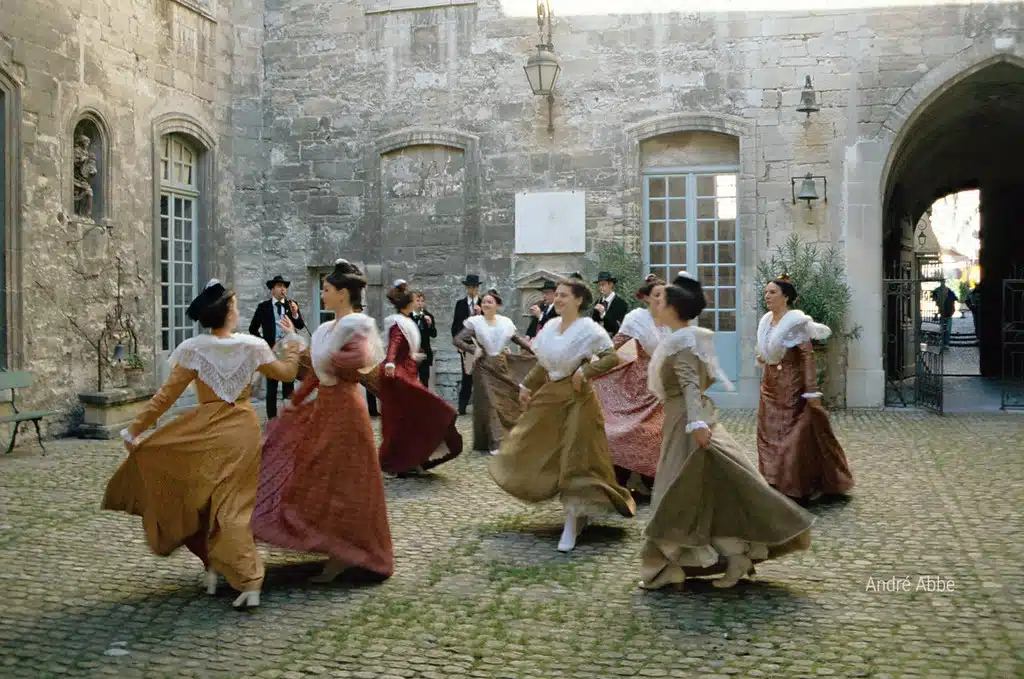
Beautiful costume that makes a queen a shepherdess!

In the 1950s, it is still worn daily, more or less simply according to the work to be done: one does not dress in the same way for the riverside bugade or for the Sunday walk. Today, it only appears in folk festivals.

Apart from the cap, it hardly evolves over the centuries: on the engravings of the eighteenth, even skirts lined at the waist, even shawls (then carved in floral fabrics) rarely lined with lace; women wear hats and not the ribbon that holds the hair on the top of the head and takes a long time to put it in place.

 ArlesianIt is also an expression:
Ah! Good! Julien is married? You never see your wife...
– She's Arlesian!
... i.e. the person we are talking about but we never see, as in the news of Alphonse Daudet* :

To go to the village, coming down from my mill, you pass a mas built near the road at the bottom of a large courtyard planted with micocolers.
[…]
His name was Jan. He was an admirable twenty-year-old peasant, wise as
a girl, solid and open face. How beautiful it was, women were watching him; but he had no that one in mind, a little Arlesian, all in velvet and laces, which he had met on the Lice of Arles, once.

Crazy lovers, Jan wants to marry him; The father and mother don't want it because they say the cute girl « and his parents [are] not from the country » ; but they give in for the happiness of their son:
– I'll die if I don't get it.

Las... Jan is wiped out when he learns that for two years his beautiful was the mistress of another.
Jan no longer spoke of the Arlesian. He still loved him, however, and even more than ever.
At dawn in the morning, the noise of a body on the slabs of The court, and that's all... Jan killed himself.

In 1872, Georges Bizet took up the theme of Daudet's news and composed a musical work that was always enjoyed listening.

Jeanne Monin

Research: various sources.
* A. Daudet - Letters from my mill – 1869.
  • Echo of the week
    Who makes his own wine?

  • Passadoc
    November 25th...
    The challenge: save 87,000 photos!

Who makes his own wine?

YearDr. Abbe
When you taste the new wine that will accompany a castagnade (roasted or roasted chestnuts, not a pugilate*), I think of the work of the cellar that followed the harvest.
 
A minority of wine growers, who joined a Cooperative, continued to make their wine for family consumption in a traditional way. Every year they came out of their father's house and press. They did not forget to prepare a few liters of picket, obtained after having macerated water on the marc out of the destret (presser), for some time would say Fernand Raynaud.
 
The picket was sparkling as its name indicated and stood around 4 or 5°. I keep the taste in my mouth when I haven't been drinking for 60 years.
 
*in the slang of the bad Togolese and Marseille boys, a castagna, it was a punch and a castagnade, a general fight. The words passed in French slang today little used. Morals have changed, so has vocabulary.
 
*Here, even moms like castagna O my paîs, O Toulouse, sang Claude Nougaro.
 
Claude Boyer
The family vineyard is not very extensive, all to the most three hectares; In two days with the help of a few friends we made our harvest and produced our wine.
I mean, when I say « we » That was my grandfather...
 
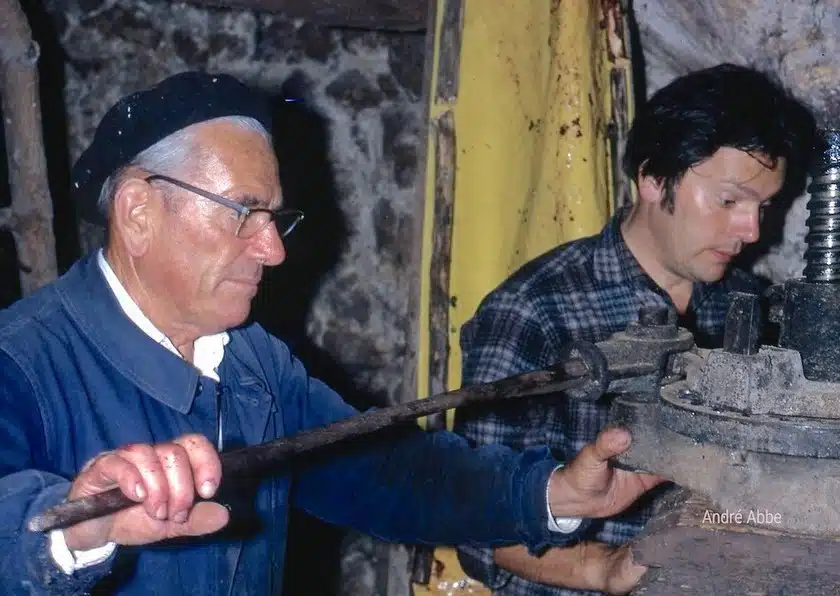
Once the grapes were picked, my father and a porter hired for the occasion would immediately empty the canesteù in the grove. Then the steering wheel was operated turning two canned rolls, crushing the grapes that fell into the tank.
 
Once the whole harvest had passed, the slurred clusters were recovered and put in the press where the mechanism that crushed all of them was activated to bring out until the last drop of the must.
 
I still hear the « click-click-click-click » follow-up « clac » That signaled that we were at the end of the race. It was then necessary to remove the heavy iron bar from its housing at the top of the mechanism and place it in another location in order to start the operation.... « click-click-click-click-clac ».
 
Then came the time of pumping. The filling tank was emptied and the grape juice obtained in the press with a large arm pump which transferred it to the stalls for vinification.
Jean Ferrat sang in his beautiful song The Mountain :
It was a horrible picket
But he was a hundred years old.
Just know how to do it
If he didn't turn your head on you.
 
 
That was the case with our picket, which the fat years managed to make 9 or 10 degrees.
Except once we broke our record. It was my role every year, I went for the bike co-op with a cluster to weigh it, and they announced:
10.8
 
I went home and told my father:
- Dad! It's 18°!
 
I still hear the laughter of the attendance that had understood of course the real degree of our harvest.
 
My grandmother and mother stopped picking around eleven o'clock to prepare the traditional aioli we enjoyed under the murrier.
 
 
Now I can say, there is a prescription, my grandfather had made over the years a faithful clientele who came to buy his wine. I saw him put his money in the iron box that originally contained LU cookies.
 
Then one day my grandfather, who knew the art of cooperage, could no longer take care of the maintenance of the barrels and we had to carry our harvest in co-op boxes.
 
It was certainly less painful but of that day the harvests no longer had the same charm and it is there that I learned that there existed Cinsault, Carignan or Direct Plan and that we could not empty our crates in any tank.

Giselle Penat-Lumbe
My paternal grandfather had started by making his wine, at the end of the 1930s when he had come to settle in Roquebrune-sur-Argens, making the decision to convert himself into a peasant and also to embark on the cultivation of peach and other fruit trees, crops unknown at the time in the area and as he came from Pierrefeu, he was soon called « Fada estranger » Who knew nothing about it...

Therefore, if I remember correctly, he had seen his request, to join the wine cooperative of Roquebrune, which had been created in 1913, unless I was mistaken, reject ... We didn't want him!
 
He certainly took care to send Dad to study at the Agricultural High School in Antibes... Which, by the way, didn't please my father who wanted to be a history teacher and/or teacher, but he wasn't asked his opinion... And my grandmother didn't get it either, as of course.
 
My grandfather had made a first acquisition of a dozen hectares in the Vergers district bordering the Argens And also, I think, in the Roques district. And there he planted vines in addition to the fruit trees.
I've known all the right equipment: trample, press, barrels that left a few years ago in brocades.
 
I started cleaning them for a second decorative life... Customization.
 
Aux dires de papa « une horrible piquette », surtout compte tenu des connaissances en œnologie de mon grand-père. Elle devait faire aussi pas mal de centenaires, qui sait ?
 
Nous avions conservé quelques bouteilles « reliques » que les Allemands, qui occupaient la maison durant la guerre, n’avaient pas prises … un essai leur avait peut-être suffi !
 
Je ne me souviens pas avoir vu la famille en déguster même lors de grands repas de fêtes dans les années 50. On devait esquiver la question et prendre le vin de la coopérative.
 
Papa avait rapidement d’ailleurs rejoint la coopérative viticole.
Après la Seconde Guerre mondiale, quelques années durant, mon grand-père avait continué de faire son vin, pour son plaisir et maintenir la tradition … ses expériences de petit chimiste comme on disait dans la famille !
 
Comme pour Claude, les termes de Cinsault, Carignan, d’Ugni blanc, d’Aramon, de Syrah, de Cabernet-sauvignon, de Mourvèdre, de Tibouren et de Grenache un peu plus tard, au fil de l’évolution de l’encépagement et de la viticulture varoise, me sont encore familiers.
 
Nous faisions beaucoup de vin de noix, du vin marquis/vin d’orange, et X liqueurs, recettes familiales et souvent affaires de femmes d’ailleurs. Je me souviens d’avoir souvent aidé maman dans la préparation de ces breuvages fort appréciés d’ailleurs, du fait maison de qualité.
 
Beaucoup de souvenirs de toute cette époque, des vendanges et divers.
 
De belles Madeleines de Proust…

Jean-Jacques Murat
« le fouloir et le pressoir » ? faliá caucar lei rasins avans de leis espotir ?
(a La Sanha de Mar, dins un ostau de la carrièra se ditz « Cauquière », se trobet una tina malonada monte se caucava lei rasins)
ps : encò de Tolosa un certan Glaudi cantava que la castanha agradava lei mametas …

[Fallait-il fouler (avec les pieds) les grappes avant de les presser ?
(à la Seyne-sur-Mer, dans une maison de la rue « Cauquière » se trouvait une cuve carrelée dans laquelle on foulait les grappes)
ps : à Toulouse, un certain Claude chantait que même les mémés aiment la castagne…]

25 novembre
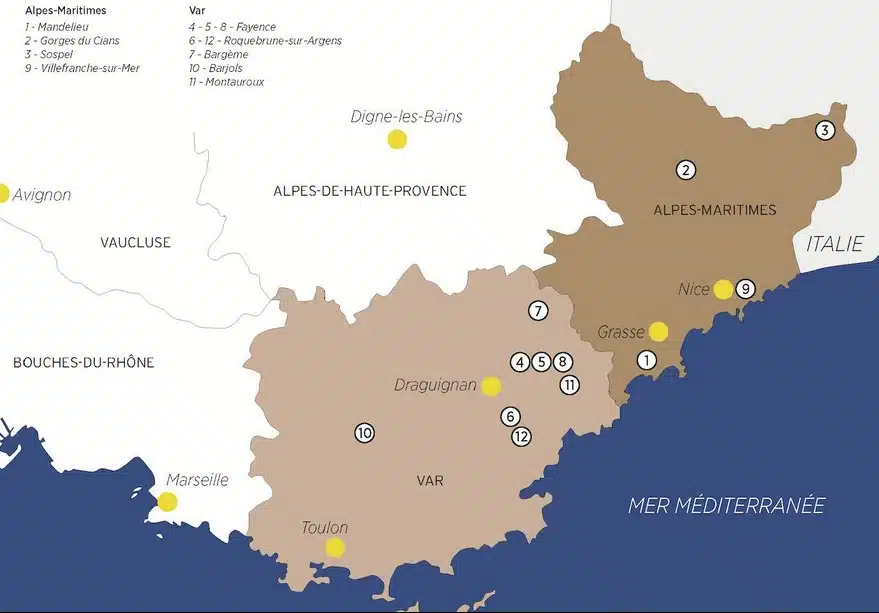
Jour J ! C’est la sortie du leporello, livre-photo Women of Provence.
 
Derrière les 12 photos prises dans le Var et les Alpes-Maritimes, il y a des récits, des histoires, des souvenirs qu’on peut lire sur le site : ils sont en accès libre. Les textes du livre et toutes les infos sont ici.
 
FrAnçois Abbe : Parmi les auteurs, nous mettons une femme à l’honneur aujourd’hui : Geneviève Bresc, l’ancienne directrice du département des sculptures du musée du Louvre. Aujourd’hui à la retraite, elle partage avec nous une histoire de vendanges familiales à Fayence (Var).

Le défi : sauver les 87 000 photos d'archives restantes

François Abbe interviewé par Nathalie Klimberg Faudeux au SATIS 2023
  • These are cited in The Gazette :
    André Abbe
    François Abbe
    Jeanne Monin
    Giselle Penat-Lumb
    Jean-Jacques Murat

  • Editor in Chief
    Jeanne Monin

Passadoc