


Hebdo 136
Holiday with Pagnol!
– Yes! We went to the coast of the Landes! The beaches are beautiful... Look!
And a febrile index, your interlocutor scrolls on his « smartphone » dozens of photos and stops on the exceptional view that will dazzle you.
So you pretend:
- Ah! Yeah, actually, it's beautiful! tell yourself by discovering a small corner of the sky, a stretch of beach lined with a few pine trees that are not very different from those on the coast near you; But your neighbor is nice... And then he seems so happy!
– And you?
– We made Brittany this year! Our lodger was a fisherman; he took us a whole day on his boat; We came back with full lockers! Let me show you this!
Your turn to search...
– Wait... That's the gulls... That, the kids bathing... Ah! There!
Admiring the neighbor in front of this small basket filled with some cakes, two or three spiders and a small blue lobster, crustaceans that he finds on his market every Sunday morning!
But when did this human and summer transhumance date?
In the 19th century, only the wealthy, civil servants who received paid leave, could go on vacation (v. 1850).
Marcel Pagnol* :
He and my father made a pair of friends, although Uncle Jules, older and richer, sometimes looks protective. From time to time he protested against the abusive length of school holidays.
– He admitted that children need such a long rest. But in the meantime, we could use teachers for something else!
- Yes! Ironically said my father, they could replace, for two months, the officials of the prefecture, exhausted by their long naps, and bruised by the leather round!
Remember also the « travel » from little Marcel to a villa in the hill, « and we will spend the great holidays » Tell him his father. [...] Then began the best days of my life. The house was called the Bastide-Neuve, but it had been new for a long time.
It was not until 1936 (Le Front Populaire – Les Accords Matignon) that paid leave was generalized: initially, two weeks; five weeks in 1982.
It is the rich British society that – from 1820 – falls under the charm of Mediterranean beaches. Summer and winter, Queen Victoria makes frequent stays in Hyères, Nice; It takes a carriage ride along the seaside, and especially on the now mythical avenue that the Nice community calls El Camin des Ingles which will naturally become The English Promenade the annexation of Nice County (1860).
– Where is our coast?
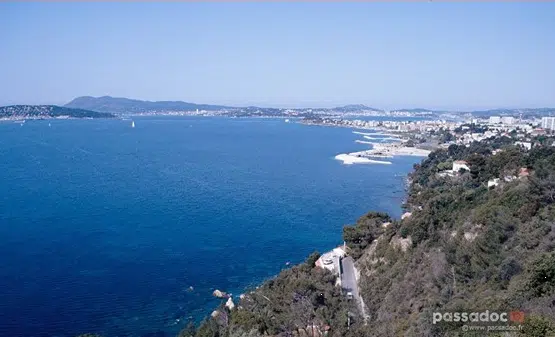
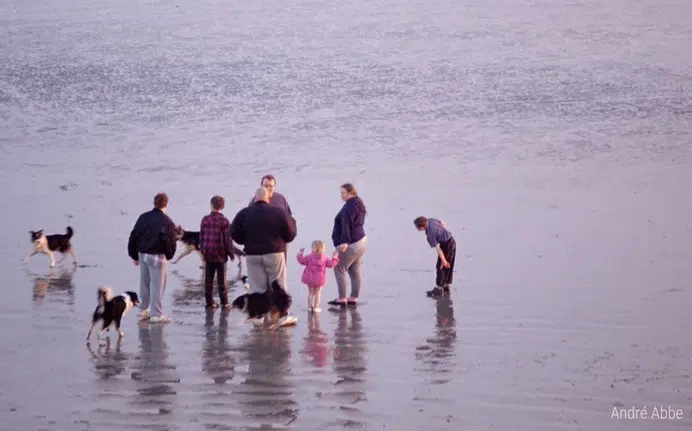
Patience... Here is one photographed by André Abbe.
Jeanne Monin
* Marcel Pagnol – 1895-1974. My father's Glory (1957).
Photo J.M. – Searches on many sites.

- The Echoes of the Week
The Abbey of Lérins
The golden wheats...
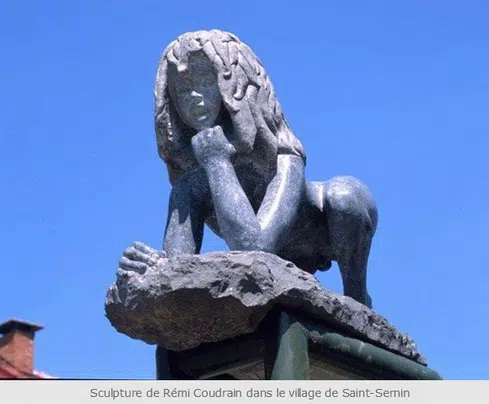
Wild child
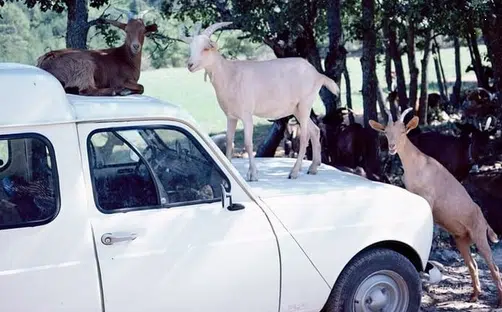
Goats... And the car! - Passadoc
The Abbey of Lérins
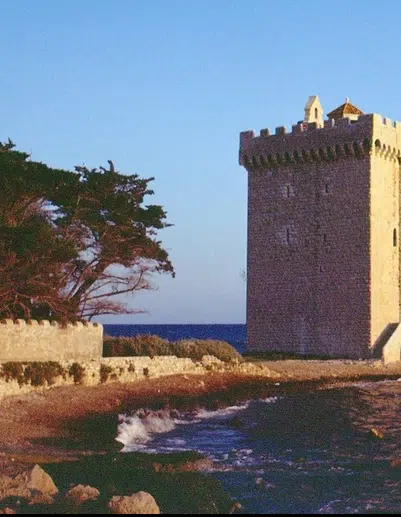
Beaucoup de structures religieuses et de lieux de prière et de méditation ont comme caractéristique des endroits isolés où le regard peut se perdre en regardant l’horizon et l’esprit poursuit les idées et les réflexions qui tourmentent l’âme humaine depuis toujours.
Le monastère fortifié de l’abbaye de Lérins abrite une communauté de moines depuis le Ve siècle ; il est toujours là, écoutant le message porté par le vent et les vagues.
Maryse Laugier
Bel endroit pour retrouver le calme et la sérénité, loin de la cohue de Cannes et pourtant si près.
Alain Cathala
Pour la petite histoire…
Le moine Honorat vint s’installer sur l’île qui porte son non. La deuxième île (Sainte Marguerite), pas encore baptisée, était infestée de serpents…
La sœur de saint Honorat écrivait à son frère qu’elle voulait le rejoindre. Celui-là, souhaitant la tranquillité et ne voulant pas que sa sœur le rejoigne lui écrivit :
– Marguerite, si vous souhaitez venir, venez à Pâques, lorsque les mimosas seront en fleur.
Mais Marguerite ne tient pas compte de la lettre de son frère et vient deux mois avant Pâques. C’est pour cela qu’à Cannes et sur les îles, les mimosas fleurissent avant Pâques.
(tiré de l’histoire de l’île Sainte Marguerite).
Autre histoire :
Nous avons aussi le frère marié à Pâques, de son nom de famille Galabru, ancien économe ; il s’est retiré dans l’Hérault sur la commune de Lunas, dans un ermitage à côté de la Fontaine des Yeux, une eau qui fait retrouver la vue à ceux qui l’ont perdue.
Laval de Nize – 34650 Lunas.
Les blés d'or
The wild child
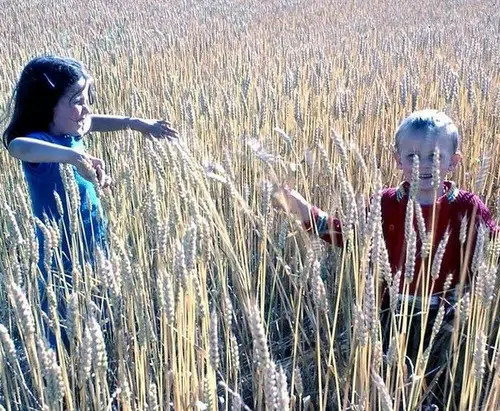
Un très beau récit écrit par Claude Boyer.
(Photo C. Boyer)
Les chèvres.. et la voiture !

Grâce à des documents d’archives exclusifs, l’association Passadoc contribue à la conservation, la transmission et la valorisation des fonds documentaires en péril, visuels et sonores.
Vous retrouvez les diffusions quotidiennes dans une lettre hebdomadaire postée tous les samedis matin et que vous recevez parce que vous avez transmis votre adresse « courriel » à François Abbe [françois@abbe.photo] ou à Claude Boyer [romenzo2010@gmail.com].
Si vous ne l’avez pas encore fait, adhérez vite à Passadoc : 10 € … → 3,40 € seulement après déduction fiscale, soit un peu moins que le prix de trois baguettes de pain pour 12 mois de lecture et 52 « Gazette » !
Photo j.m.

- Writing Passadoc – Participated
André Abbe
François Abbe
Claude Boyer
Alain Cathala
Maryse Laugier
Jeanne Monin - Layout
Jeanne Monin