


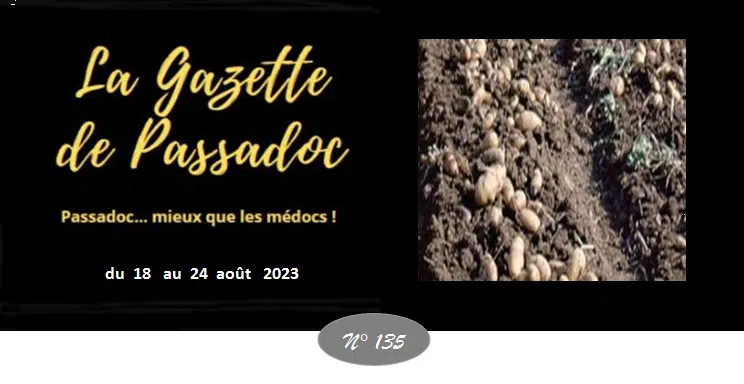
The Hebdo 135
Life without her...
« She »... It's the potato! Can we imagine life without it so present today on our plates? Hard!
It seems to be inseparable from the name of Antoine Parmentier (1737-1813 – military pharmacist, agronomist, hygienist), known for introducing the tuber into our diet (XVIIIe century).
But its appearance on our continent is much older since it is found in Europe as early as 1540. Native to South America, – during research, we discover* remains of cultivated tubers dating from 8,000 B.C. – here it is first in Spain under the name of « patata » ; it crosses the Pyrenees, travels a long way to Italy and becomes « taratuffi », i.e. « small truffle » ; Then she crosses the border and stops at Saint-Alban d'Ay (Ardèche).
In the rest of hexagon, it is not very popular: it is believed to be toxic, so the reserve is the only feed for animals.
Fortunately, Parmentier shows that the tuber is completely edible. He offered Louis XVI a bouquet of potato flowers. It is said that the king, first surprised, detachs a flower which he slides into the buttonhole of Marie-Antoinette. « That evening, at the Court of Versailles, we had the privilege of tasting, for the first time at the "parmentière".«
Now, the sovereign will help Parmentier conduct his research. The legend that he would have complimented agronomist: "France will one day thank you, Mr Parmentier, for finding the bread of the poor."
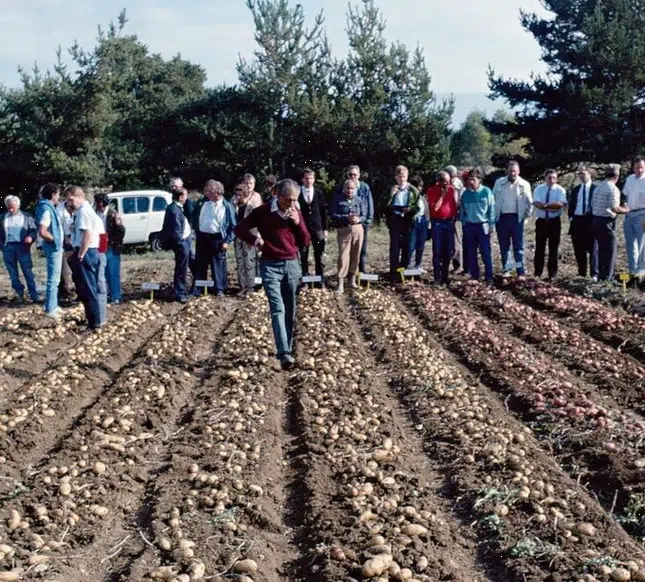
– Where are our potatoes?
Patience... Here's a whole field!
Jeanne Monin
Research on several sites.
*Idem 13,000 B.C., south of Chile: discovery of potatoes, certainly eaten but not cultivated.

- The Echoes of the Week
The cork collector
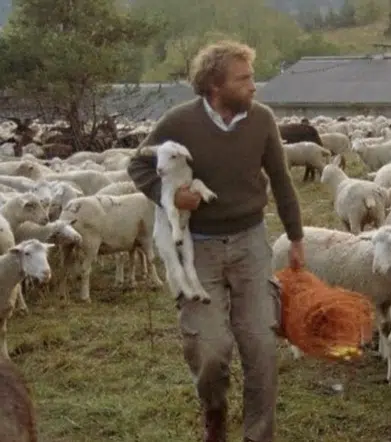
Like a wool river
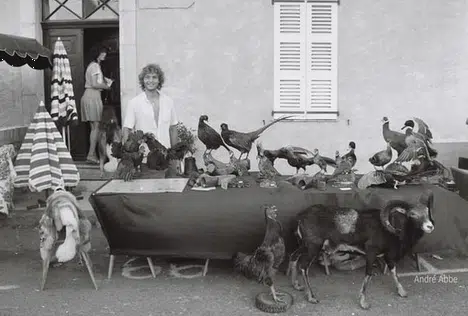
The taxidermist
Promenade in Provence
- Passadoc
The old mill
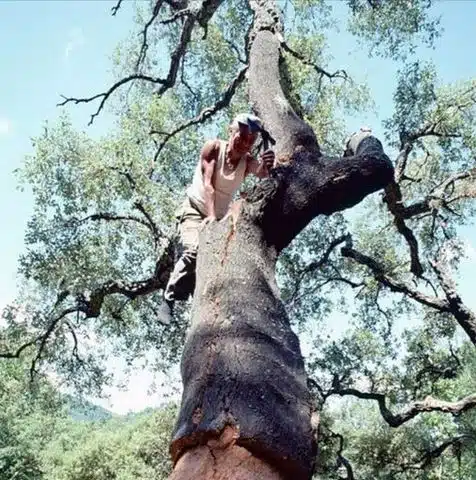
The cork collector
Robert Masson
– Without knowledge in this field and without Wikipedia, but with the eyes of the Motte road areas, I would say 6 or 7 years.... If time is more important, I just don't see it passing!
Patricia Jouve
– At least 10 years, I think...
- Nine years.
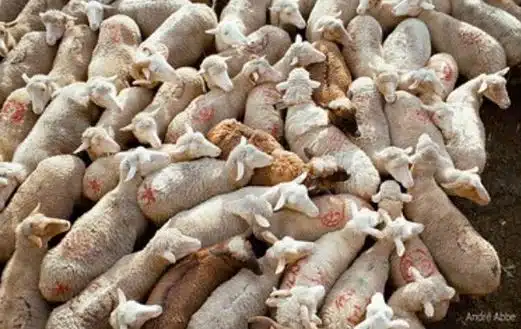
Like a wool river...
The taxidermist!
Promenade in Provence
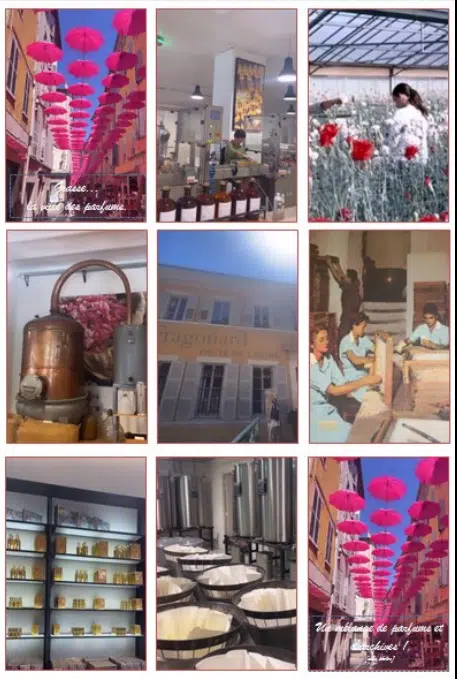
A mixture of perfumes and archival photos including some of A. Abbe!
Emily Keliher

The old mill
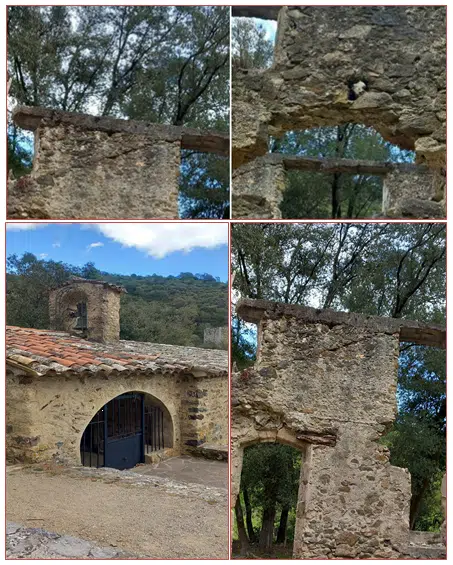
The old mill of Saint-Cassien-des-Bois (Var) on the edge of the Siagne.
Mary PhotosLaugier

- Writing Passadoc – Participants included:
André Abbe
François Abbe
Sabine Avois
Patricia Jouve
Emily Keliher
Maryse Laugier
Jeanne Monin - Page Layout
Jeanne Monin