


The weekly 130
Passadoc Gazette!
– What if we publish a summary of the writings and photos of the week?
Thus, a beautiful day of January 2021 was born. « Passadoc Gazette »... And it's Claude Boyer we owe the slogan Passadoc... Better than drugs!
The first 49 issues are on this page ; the following – from January 2022 until today – are Here.

The first known printed newspaper appears in 1605.
Johan Carolus – an Alsatian printer-publisher – launched the first weekly gazette: Relationship go Fürnemmen und gedenckwürdigen Historian → Communication of all important and memorable stories. The publication continues until 1681; At that date, Strasbourg became a French city, the company of Mr Carolus firm.
Does that mean that the information does not circulate before that date? No, of course... From ancient times, in Rome and Athens, news is spread from street to street, from village to village, almost always by word. « ...almost always » For in the big cities, the rulers display their decisions concerning taxation, justice, etc. The majority of citizens cannot read, but they will not be able to claim that they have not been informed!
Let us pass the time and see what happens in France.
– 1610. Contemporary by J. Carolus, Jean and Étienne Richer publish Mercury Francis, an annual of more than a thousand pages containing news from all over the world; he is considered an ancestor of the French press.
– 1631. By special permission of Louis XIII, Théophraste Renaudot publishes the first French periodical, which has the title... The Gazette Hey! It's a weekly.
– 1777. Publication of the first daily newspaper (in France): on four pages, The Journal de Paris reports the main cultural events associated with a few different facts.
All these publications are purchased by the notables because they are expensive for the small people who are usually illiterate; He also receives information from the colporteurs, street merchants who tell of the happiness and misfortunes of the villages they have traversed; Sometimes they amaze a little, that's how legends are born!
– The more time passes, the more newspaper titles are available and accessible to all. In 1900, the price of a daily is a few cents of francs. After the new policies, the stories of big business (Dreyfus... or Landru), we are passionate about the series signed by senior writers – Balzac, Féval, E. Sue, J. Verne, ... – or by young authors, such as Daudet who begins in literature; He's 19 when The Figaro (founded in 1826) opened his columns.
– 2019. There are 3,700 press releases, dangerously threatened by television (the « Mass of 8 p.m. ») and the Internet.
– When does our gazette arrive?
But she's here... In front of you... And she's wearing number 130!
Jeanne Monin
GAzette : word borrowed from Italian Gazette → flyer information sheet (av. 1580) which cost gazeta, name of a Venetian coin.
[Dictionary of the French Language – Alain Rey.]
Research on various sites.
- The Echoes of the Week
The treasures of the regions
Good use of television!
TV-based loccitan
Little story in a flock
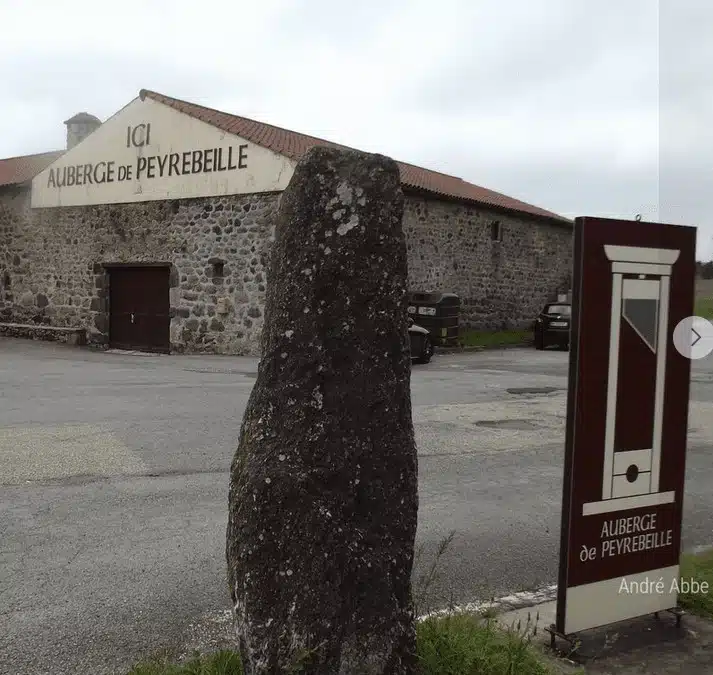
In Ardèche - Some information. still…
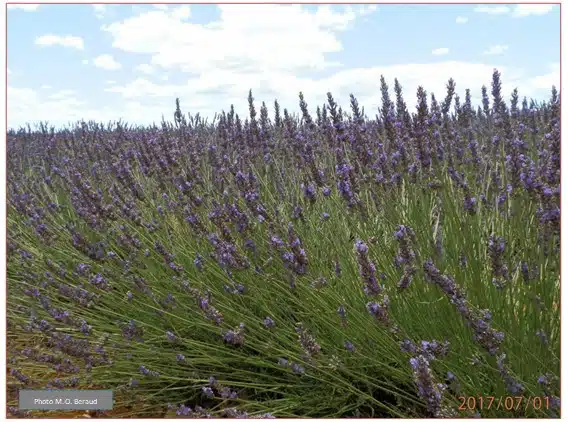
The treasures of the regions
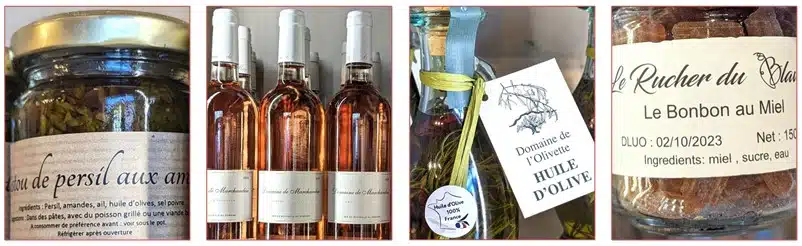
We enjoy honey, fig jam, nougat...
olive oil and wine!
Good use of television!
Jeanne Monin
« The House of Bees »... There are a few in France: in Loiret, Drôme, Morbihan, Rocamadour, etc. We're not gonna roll the list!
In one of them, the beekeeper used an old TV to install a hive: the box is outside of course, the bees come in and out as they please; The screen is inside and visitors discover through the window a bit of the life of the bees...
A valley adjacent to the Ubaia River did not receive television, and its inhabitants still lived without it, and still sang at the vigil. But despite the small number, some propagandist found money to put a transmitter on them, so they bought a post.
– Come see my TV!
which didn't mean « Watch my TV », it wasn't plugged in, but by lifting a corner of the cover, you could see the mark: it wasn't yet Chinese, it was often Philips, or something... So we congratulated them:
The Occitan on TV...
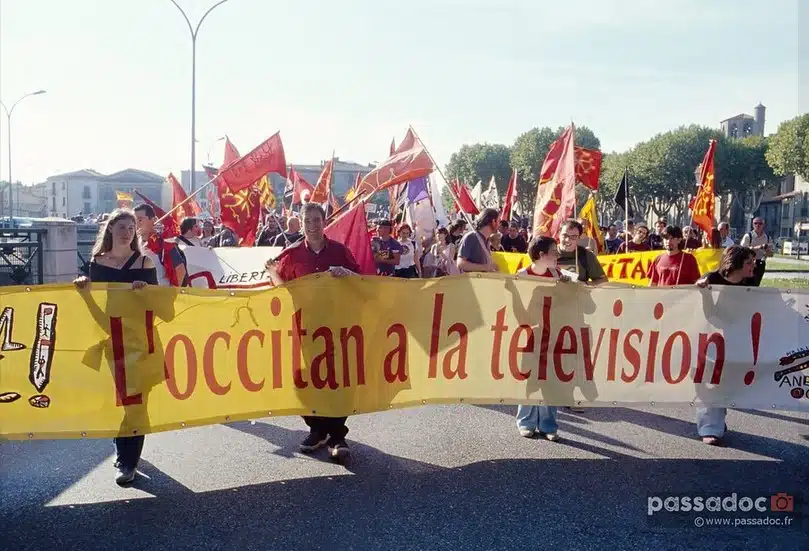
18 years ago, from all regions of Occitania, We were 10,000 to ask for more docitan on television.
Since the creation of the Occitan Region, « all regions of Occitanie » no longer has the same meaning. In 2005, that meant « of all the regions where the language is spoken« including Italy and Spain.
There is no less, but there is no more.
Only the Marseille and Toulouse stations produce programs, in Provençal at one, in Languedocian at the other, dialects of the language of Oc.
André Abbe
France 3 Aquitaine also broadcasts in Basque and Gascon-bearnais.
Little story in a flock...
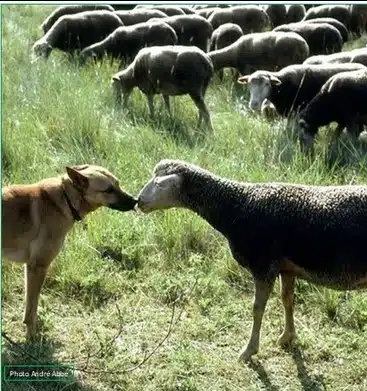
Yet the flock often offers protection to the weakest that it places in its center; But some dreamers think they'll be stronger on their own. Make the Kéké! They knew only protection and believed that they were alone.
He's telling him:
– You get in the line or you'll know what he's gonna cook...
In Ardèche
Passadoc.


- Writing Passadoc – Participants included:
André Abbe
François Abbe
Christophe A-Don Pariente
Patrick Erard
Jacqueline Marvier
Jeanne Monin - Layout
Jeanne Monin