


The weekly 114
The train
It was a revolution when the train appeared in our lives as rural or urban dwellers!
Because we used to travel on foot... By bicycle... If the wealthy rolled carriages, the humble moved in carts, the bourgeois in carriages, by car on horseback.
La Fontaine says:
In a way up, sandy, awkward,
And from all sides to the sun exposed,
Six strong horses were pulling a Coche.
Women, Moine, Old men, everything was down.
The coupler knew, blew, was returned.
And Alphonse Daudet writes:
– I had taken the diligence of Beaucaire, a good old patache that did not have a long way to go before being returned home, but which wanders all along the road, to make it look, at night, to arrive from a very far distance.
And now, in 1804, an English engineer – Richard Trevithick – presented an extraordinary machine: a steam locomotive* Who's moving at 4 km/h!
It would take long paragraphs to tell here the evolution of this towing machine, from the original to the present, evolution that will make us railway travellers. Just a few dates limited to hexagon:
– 1827. First railway line. It is only 21 km long and is used to transport coal extracted from the mines of Saint-Étienne.
– 1837. Opening of a first passenger line.
– 1952. A leap in time: the SNCF (created in 1938) gradually replaced steam engines with diesel locomotives.
– 1980. The electrification of the French railway lines is almost total
– 2007. The TGV (High Speed Train) reaches 574 km/h and becomes the fastest train in the world.
And some works inspired by the rail:
– The Human Beast, 17th volume of the Rougon-Macquart, by Émile Zola (1890) ... and superb film by Jean Renoir (1938).
– The East-Express Crime – Agatha Christie
– The Train, a film with Burt Lancaster,
– The arrival of a train at La Ciotat station (1896). If the spectators are impressed by the images of Louis Lumière, no one is panicked to the point of leaving the room screaming. Another legend to be twisted.
– And our own train... When's he coming?
There he is! It's the yellow train., « Unique in the world! » says the mayor of Font-Romeu. At 30 km/h, a fabulous trip to Catalan country. Watch out for the start!
* Petit cocorico Gallois to recall the work of Denis Papin (1647-1713).
Jeanne Monin
Research on various sites.

André Abbe
Claude Boyer
I crossed Mauritania ten years after you and I also stopped in Nouadhibou to see this endless ore train of 2.5 km, 15,000 tons, 210 wagons towed by four locos of 3,000 cv each... Impressive.
François Abbe
What is the power of a loco in France by comparison please? Like we have a pro, we enjoy it!
Claude Boyer
Depends on the loco, it runs between 2 and 3 000 cv, too. In France, a freight train is up to 750 m for about 1,500 tonnes. Cargo trains (fuel transports) can be towed by a UM (Multiple Unit) i.e. two locos and weigh up to 3,200 tonnes.
Before each departure and at each transformation in the train composition, brake tests are performed.


- The Echoes of the Week
Rue de la Chance
Frédéric MistralWrite Provencal
- An exhibition. to visit
- The Library of Passadoc
- Participate in La Gazette!

Rue de la Chance

Frédéric Mistral
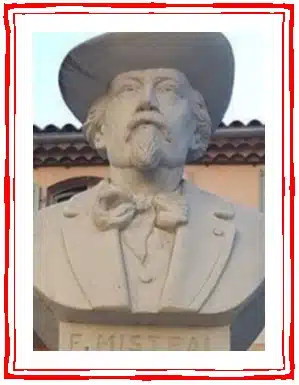
Write the Provencal...

Jean-Jacques Murat
« O Balm! O Clarim! O Regale! Miramant! O Patz of the natura mansa! What relanger de bonur e de pantai paradisen avètz dubert sus mon enfença« (Badia de Sant Michèu de Ferigolet 1839/41).
This is how Frédéric Mistral originally wrote.
It was after several years of exchange of letters, about spelling, with Roumanille, his 12-year-old elder whom he had known at Dupuy College in Avignon (1845/47), that Mistral capitulated on 9 January 1852.
« I'm converted to the Crousillat systhema! You're going to say that I'm a real girouette, a chameleon, the most versatile of men, more changing than fates and waves, that's how: alea jacta is. Ah! What a pity! What bitter regrets and for you and me! If you knew, now the headband has fallen. If you knew how ridiculous our spelling seems to me. You'd be amazed! Indeed, I ask you, what is the language which neither singular nor plural, and which can establish such equivocalities:
Ama: Love
Ama: loved
Ama: you like
It's mocking all the rules, it's trying to turn our beautiful tongue into a terrible patois incomprehensible to anyone other than the author. I cannot imagine what evil deity had made us so obtuse, so bounded, so obstinate in such a patho... «

After the yellow train of the Pyrenees, the train from Mauritania d
This is Patricia M. Renoux's Moors Massif.
At La Garde-Frenet... Travel from here and elsewhere... March 31 to April 12


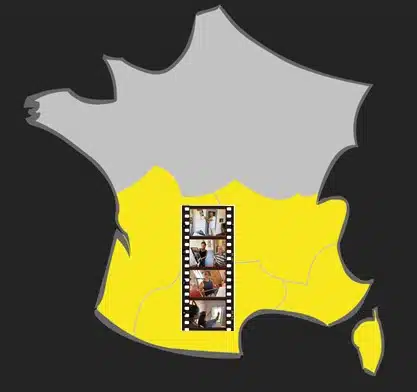
You have pictures of the regions of:
- Auvergne-Rhône-Alpes
- Corsica
- New Aquitaine
- Occitanie
- Provence-Alpes-Côte d
Anyway... You have all the south in pictures!
In your drawers, you keep old postcards... You have anecdotes to tell, stories to share, travels to tell... Passadoc is waiting for you!
Send your documents safely to:
romenzo2010@gmail.com
Depending on the subject, they will be published on the site
Passadoc,
or on Abbe.Photo
and perhaps in
“Passadoc Gazette”
It's better than drugs!


- Writing Passadoc – Participants included:
André Abbe
François Abbe
Claude Boyer
Jeanne Monin
Jean-Jacques Murat
Patricia M. Renoux - Layout
Jeanne Monin