- Echoes of the week
The letter to the Passadocians!
Placette Mayol
And then here's some worms...
Honor to foreigners
The Baío de Sampeyre
The bravade of Saint-Tropez
Remembrance of Harvesting
The martyrs of the Charles Quint Tower
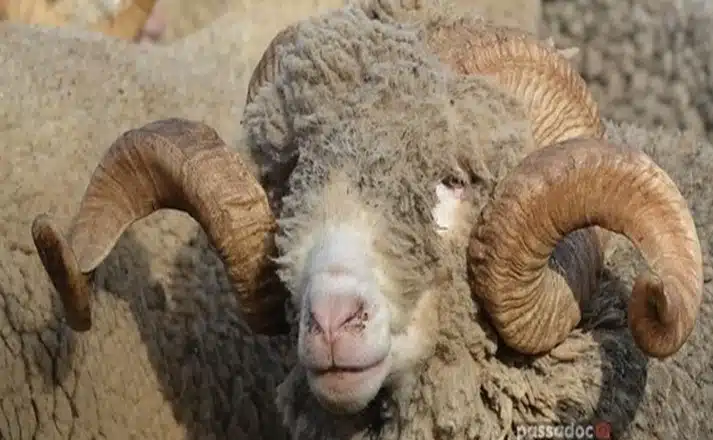
Home wool
. - The Library of Passadoc
Roquebrune in images


François Abbe
Placette Mayol
André Abbe
And then here's some worms...

Honor to strangers!
The banner was stretched over the entrance of Roquebrune during the Feast of Our Lady... the foreigners of the time were the people of Puget and Muy, the nearest villages, on the other bank of the Argens. Those who came from far or far away were called "External strangers".
Today, foreigners in Provence come to work, spend their retirement or vacation... and we would find it difficult to define what is called "a stranger". The nationality written on the passport is misleading. In my commune, the most efficient olive growers are Belgian. To me, they're not strangers.
I'd be wrong to be hostile to strangers... being a stranger myself when I travel!
I can't resist the pleasure of giving a photographic hat to an Englishman from the Var who had come with her dog Bella to protest in Brignoles against the project to search for shale gas veins in the Var basement, which would have just preceded the exploitation, let us be sure. By 2020, this gas is no longer worth much after the fall in oil prices. The Americans don't know what to do with it anymore. This exploitation would have ruined our country and made a financial flop.
We weren't very numerous to protest in Brignoles, 99 out of 100 native Varois remained at home, but the Englishman from Var was present!

The Baío de Sampeyre
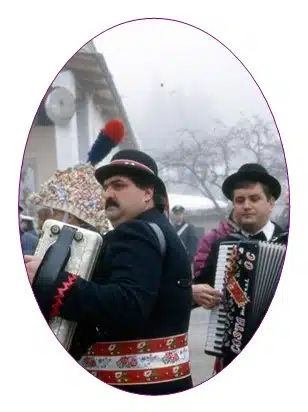
What are the dates of the Baío de Sampeyre (province of Cuneo) that will take place this winter?
Be patient. Traditionally the dates are decided on the day of Epiphany, never before.
The Baio took place during the years in 2 and 7, but the Covid forced the organizers to send it back later. I'll keep you posted!

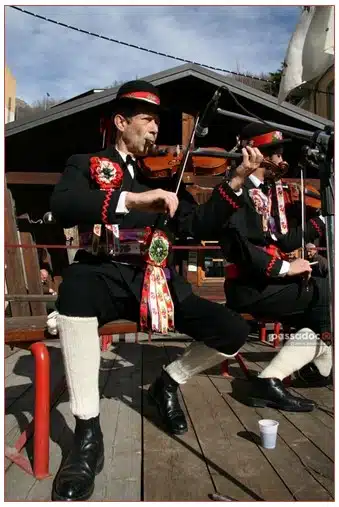
La Bravade de Saint-Tropez
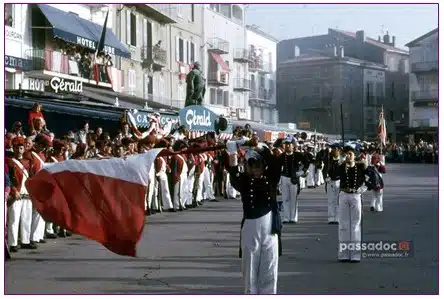
In the 1980s, I went every year to the Bravade in Saint-Tropez; It continues according to the same ceremonial.
Many people wrongly believe that this is a party for tourists. False, it is a tradition linked to the history of the city that the Tropezians respect.
Recently a documentary (television) about the 60s and 70s recounted free love, white nights, playboys in Saint-Tropez with Brigitte Bardot in figure of bow. Once again, the commentator spoke of "a fishing village", this is also not true.
Saint-Tropez was a thriving commercial port where there were some fishermen. The image of the fishing port is tenacious. Free-love sinners overabund in Saint-Tropez but professional fishermen rely on the fingers of one hand. The luxury yachts have replaced the cargo, the sharp and the die of puar.
About free love, let its followers be reassured: it is a venial sin!
There are two bravades in Saint Tropez: Moon to celebrate the feast of the patron saint of the city (May); The other, the bravade of the Espa-gnols (June), to commemorate the victory of the Tropéziens over the Spanish invader on 15 June 1637. Good Bravades 2023!
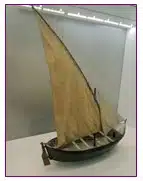
Murre de pouar [so called because of its spur that makes you think of a pig groan]: It is a traditional fishing boat on the Provencal and Languedoc coast. With its characteristic spur, the pouar die is also recognized by its mast tilted backwards and rounded rear shapes.
(Miscellaneous research. Jeanne Monin)
Memories of harvest...
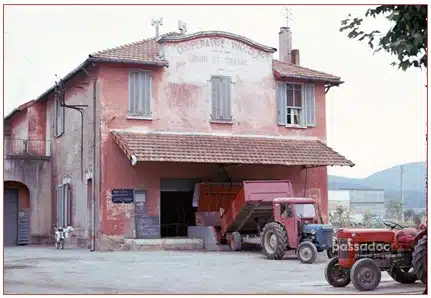
Valérie Lamaix
The martyrs of the Charles Quint Tower
All those who know or have visited Le Muy have seen this famous round tower overlooking the eastern entrance of the city and which now houses the Museum of Liberation.
This tower built in XIIIe century, called Tour Notre-Dame, is the witness of a historical and local event that took place in 1536 and since then has earned it the name of Tour Charles Quint. It is the story of the Martyrs of the Tower and the death of the Spanish poet Garcilaso de La Vega that I will tell you today.
This story plunges us back into the first half of the XVIe century at the time of the invasions in Provence by the imperial troops of Charles Quint. Charles Quint, both Emperor of Germany, of Austria, king of Spain, dominates the world and encircles France (of which Provence has been part since 1481).
Twenty years, Emperor and Francis Iand Two times Charles Quint invaded Provence: in June 1524, the emperor stomped successively from Fréjus, Brignoles, Saint-Maximin and Aix before besieging Marseilles; but caught in tenaille, he left, defeated, in Italy in October of the same year.
In 1536 Charles Quint returned to his chance with this time a much larger and much better prepared army. It was there, in 1536, during the second invasion that our history was located.
On 22 June 1536, Charles Quint's troops left from Asti towards our Provence with an impressive army: 400 lords, or sons of lords, 2,300 lancers, 2,450 light-horses, 10,000 Spanish infantrymen, 24,000 Germans and 9,400 Italians, not to mention thousands of other soldiers who arrived by boat on the Mediterranean coast.
On 4 August 1536, all this group arrived at the Muy, built a camp there, spent the night there before returning to the conquest of Aix (via Draguignan which fell on 26 July then Brignoles and Saint-Maximin). At that time, Charles Quint did not know that the following 19 September he would return to the shameful Muy, confused and beaten by an invisible enemy.
It must be said that François Iand had decided to wage a particular war: at all costs avoid confrontation and practice the policy of « burning earth » depriving the enemy of all necessary resources
By order of King Francis I, the Muy, Vidauban and Lorgues, as everywhere on the passage of the troops, one destroys harvests, mills, burns the reserves, fills the wells and prevents the empire soldiers charged with the supply from supplying or looting the villages.
Thus Charles Quint met little resistance on his way (towns and villages including Aix were deserted); He even succeeded in being crowned king of Provence at Aix. It was also from that moment that this invasion, so easy so far, began to end. The imperial troops, continually harassed by the French army and forced to eat only green fruits, were undermined by a terrible epidemic of dysentery. More than 20,000 men died in a very short time, forcing Charles Quint to turn back and return home, head down crossing the Var and Le Muy one last time.
On Tuesday 19 September 1536 (a doubt remains on the date: 12, 13 or 19), the rest of the imperial troupe arrived at the Muy and was considerably slowed down in his retreat because a watch-apens opened by some ten Muyois (50 according to some) took place at the foot of the famous Saint Anne Tower of this beautiful town of the Muy.
It must be said that in Muy, at that time, we were recently French but proud of being and that defending his freedoms against invader was an obligation. A dozen Muyois loyal to the king and courageous therefore set a trap to the omnipotent emperor. The trap was simple: one locks in the armed tower of the Arquebuses, one waits for the passage of the emperor and his suite and one shoots in the pile! How do we recognize the emperor and his successor? Very simple: when a caravan with well-dressed strong people will pass at the foot of the tower, it will certainly be the emperor and this is where it will have to be fired. The courage of these Muyois, who knew perfectly well that they would not emerge alive from this tense trap, must be praised.
The imperial troupe began its long parade when suddenly the Muyois saw a man of a high stature sitting on a white horse, well dressed and surrounded by a whole procession which they immediately took for the emperor.
Many shots followed and the man taken for Charles Quint was shot down.
Unfortunately for our Muyois, there was a mistake about the person: the man shot down was not Charles Quint but the soldier poet Garcilaso de La Vega. For those who, like me, do not know this poet, know that in Spain he is now considered one of the major authors of Spanish literature.
This trap set against the emperor did not remain unpunished, the emperor had some cannons fired, ordered the assault of the Tower. However, to avoid wasting too much time, Charles Quint, after some assaults, decided to negotiate rather than attack. He promised life to the Muyois if they surrendered. The Muyois accepted the emperor's offer, surrendered... before they were all hanged at the foot of the Tower. Charles Quint obviously did not respect his word and thus avenged himself of the death of his poet friend.
After this assault and summary executions, the troops returned to Nice and Italy without ever returning to Provence.
Les défaites en Provence restent dans l’histoire comme les plus gros échecs de Charles Quint. Il laissa la Provence dans un état déplorable, où famines et misères régnèrent pendant de nombreux mois suite à cette invasion !
Je tiens à préciser ici qu’une autre version (probablement véridique mais moins romanesque d’où son oubli…) existe concernant la mort du poète au Muy : Garcilaso se serait blessé lors de l’assaut de la tour en tombant d’une échelle. Il serait mort à Nice quelques jours plus tard des suites de sa blessure.
Mais qu’importe les versions, l’important est de savoir que quelques braves hommes courageux se sont élevés contre l’envahisseur. Cette action est à mon sens plus que symbolique car ce fut une des premières actions prouvant l’attachement de la Provence à la France.
Depuis ce jour la Tour Saint-Anne se fait appeler Tour Charles Quint en hommage à ces martyrs du Muy, tombés depuis quelque peu dans l’oubli.
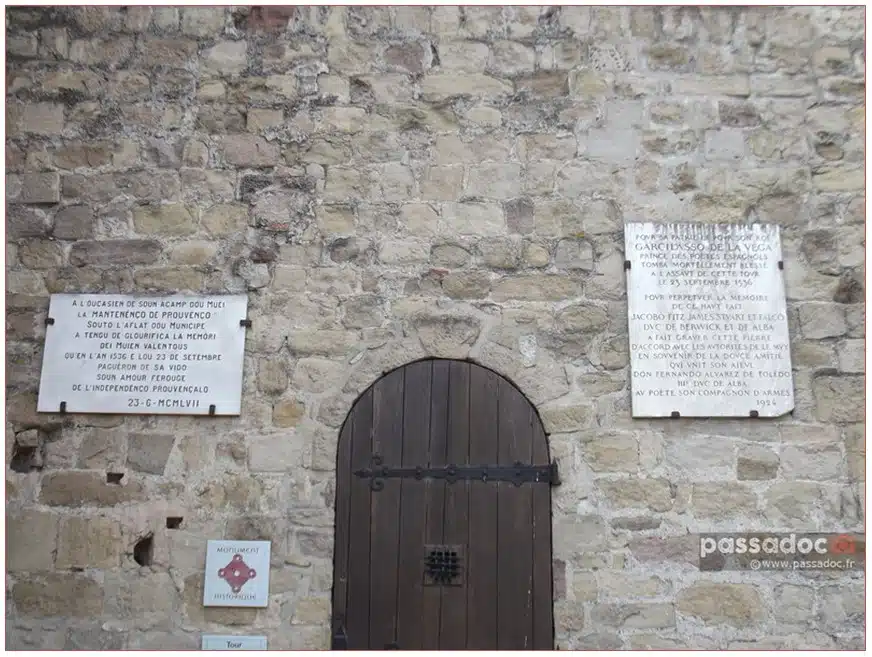
André Abbe : il y a 480 ans, les Espagnols combattaient en Provence. En témoignent trois plaques commémoratives :
– Une plaque en espagnol à la gloire du prince des poètes Garcilaso de la Vega blessé à mort “par erreur” au pied de cette tour.
– Une plaque en français, hommage à Garcilasso, avec un “s” de trop à son nom.
– Une plaque en provençal à la gloire des Muyois qui ont payé de leur vie ce coup d’arquebuse.
Depuis près de 500 ans, le bouche-à-oreille des Muyois raconte que sur la tour il y avait 12 adultes qui ont été pendus et un adolescent qui a eu la vie sauve mais les oreilles coupées.
Patrick Fabre
La laine de chez nous...
Patrick Fabre – directeur de la Maison de la Transhumance – raconte :
Bien que longtemps considérée comme la principale production de l’élevage ovin, la laine est en effet aujourd’hui classée par l’Union européenne comme un « sous-produit animal ».
Depuis les années 1950, les fibres synthé-tiques dominent le marché du textile, la laine représentant moins de 2 % des fibres utilisées au niveau mondial.
En France, de nombreuses entreprises du textile ont fermé ou ont été délocalisées. Actuellement, la plupart des laines françaises sont ainsi envoyées en Chine pour être lavées et transformées industriellement, puis reviennent en France ou dans les pays voisins sous forme de produits finis. Aux plus mauvaises périodes, la vente de la laine brute ne payait même plus le tondeur, ce qui faisait qu’elle apparaissait auprès des éleveurs comme un déchet encombrant et générateur de coût.
Depuis quelques années, la laine retrouve toutefois de l’élan dans des domaines variés comme l’habitat, l’ameublement et surtout l’habillement. L’attention récente aux res-sources naturelles et renouvelables, la recher-che de la traçabilité des produits, l’intérêt pour les petites structures de transformation dans le cadre du développement territorial, pour les races à faibles effectif, donnent de nouvelles impulsions à la valorisation de la laine. Partout en France, les initiatives, individuelles ou collectives, se développent.
Dans le sud-est, en complément des entre-prises existantes : manufacture Brun de Vian Tiran (Vaucluse), SCOP Ardelaine (Ardèche), filatures de Chantemerle et du Valgaudemar (Hautes-Alpes), de plus en plus d’éleveurs réapprennent à trier la laine et à la valoriser sous formes de pelotes, de vêtements ou de tapis.
C’est le cas de l’association Raiolaine, où une vingtaine d’éleveurs de brebis raïole, installés dans le Gard, l’Hérault, la Lozère, l’Aveyron et l’Ardèche, relancent une activité lainière locale pour la literie, le feutre, le fil ou encore le tissage.
Dans les Alpes-Maritimes, les éleveurs se rendent en Sardaigne pour faire transformer la laine de brebis brigasques, longue et très résistante, pour la fabrication de tapis. Cette initiative permet également de faire la pro-motion de la race brigasque, typique des Alpes du Sud et du Piémont italien, mais en voie de disparition.
L’association Mérilainos, qui rassemble une quinzaine d’éleveurs, fait transformer en Piémont la laine de brebis mérinos d’Arles en laine peignée. Chaque éleveur est ensuite responsable de la vente de la laine, le plus souvent au détail sous forme de pelotes et, pour certains, en kits à tricoter et sous-vêtements.
Comme le rappellera l’exposition « Bête à laine : le mérinos d’Arles », inaugurée le vendredi 18 mai au Musée des Alpilles (Saint-Rémy-de-Provence), la race mérinos d’Arles a été créée voici plus de deux cents ans en Pays d’Arles pour améliorer la qualité des laines issues des races locales. Elle produit aujourd’hui la plus fine d’Europe et la plus gonflante au monde, et est logiquement celle dont les cours sont actuellement les plus porteurs.
La Maison de la transhumance prend sa part dans ce nouvel élan, avec l’organisation récente pour les éleveurs d’un voyage dans le piémont italien, ainsi que le développement de vêtements de randonnée dans le cadre du projet La Routo.
Alors, faut-il croire de nouveau en la laine ? Pourquoi pas !