


Hebdo 131
You said « knitting » ?
How long have we been knitting? Since... for a long time!... as attest fragments of socks found in Egypt (th century) or Peru (- 300).
The ancestor of knitting is probably the naalbinding*It seems to be a simple Viking technique, consisting of using small lengths of wire, connected together to create a kind of fabric.
The sprang is also mentioned; Is it easier? Not sure! [...] works with either a frame or a pair of parallel beams. The yarn is prepared by winding in loops on either side of the frame and crossing them in the middle of the frame.
Pristi! We are far from the pair of needles used today, even knitting machines whose first was invented in 1589 by William Lee, English.
Time passes...
1789. Here are the knitters of the Revolution, say « The Jacobines ». Women of the people, they attend the trials of the nobles, follow the sessions of the Convention, call the deputies. Some prefer to settle at the foot of the guillotine, and while knitting, they watch the heads fall...
1914. Whether bourgeois or modest in origin, young girls learn to knit. Also when the Great War arrives, in all families, women make scarves, gloves, hats, socks that will be sent to the fighters: For the trembling torsos under the shower, for the faces pruned by the bourrasque, for the blue noses, for the feet petrified by the frozen mud, for the knees pruned by the long reptations on the dear soil of France, so harsh when it is necessary to hold it, for the heroic hands that were crumbling on the cold and heavy rifle**...
1939. Second World War... hands are taken over, needles that are not just feminine, because men also knit.
Today, in Scandinavian countries, as many knitters as knitters. In Peru, on Taquile Island, men knit, women weave. In our home, the Irish shepherds were spinning and knitting wool while keeping their flocks. It remains to be seen whether this is still the case...
So, « I don't know. » Handmade knitting? Only nenni! It is present in many parades « high seam » And it costs a lot!
– When does our knit happen?
Patience... here it is... look at it: it's a sweater « mathematician » Hey!
Jeanne Monin
* bound with a needle ; used in Scandinavia (793-1066 C.E.) to create resistant clothing.
** Camille Lestienne, journalist, who quotes « The Chorus of the Truncated » – Journal of the 17th Territorial – May 10, 1915.
Research on many sites.
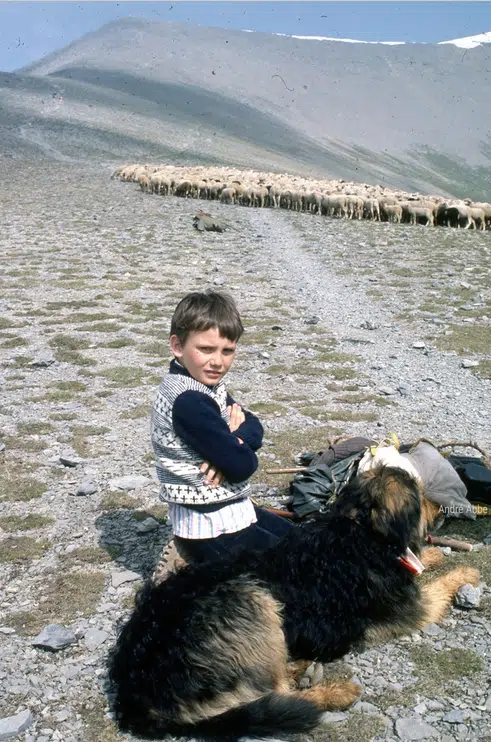
In 1984, sweaters were pulled out to make transhumance. And to believe my posture, it had to pee!
Good day to sheep lovers, Mercantour and hand knit sweaters (see the girl of the designer Nadine Berenguier sweater)
FranSee Abbe
A sweater « mathematician », with signs « plus », signs « less », signs « multiplied » Hey!
- The Echoes of the Week
Cork oaks
Expo-Photo
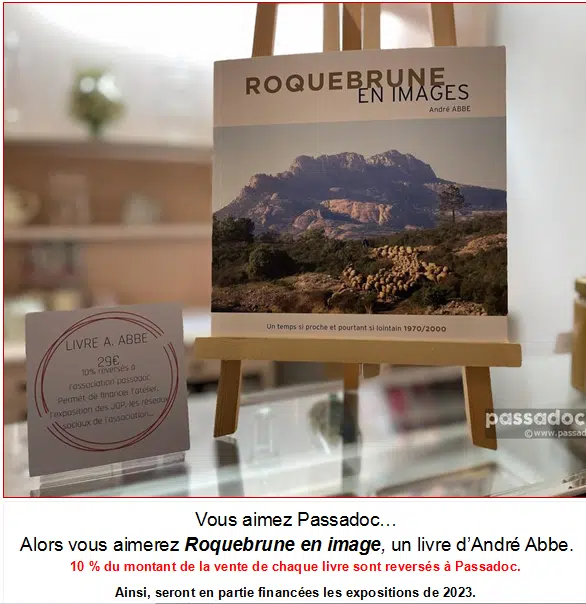
The Rock of Roquebrune - Passadoc

Cork oaks
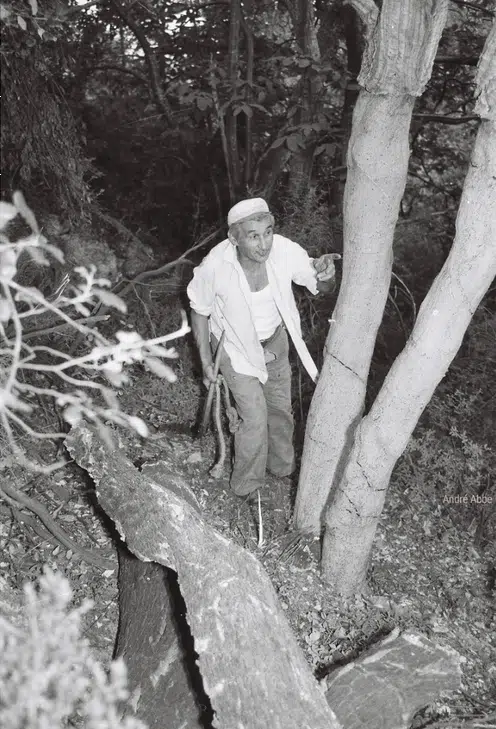
This scene really happened. It was in 1984 in the Moorish Forest (Var). In 2023, it appears that even cork suffers from drought. Did anyone find out?
François Abbe
Giselle Penat-Lorde
Indeed, it is not a galejade. Actually, it is not cork that suffers from drought but cork oaks.
Expo-Photo

and the village of Roquebrune have arrived! Do you like them?
We're counting on you!
Two exhibitions:
1. The Roquebrune-sur-Argens Photographic Festival It started on 22 July and continues until 30 July.
2. The exhibition « Works and days » dAbbe Photo Association until November.
The Rock of Roquebrune
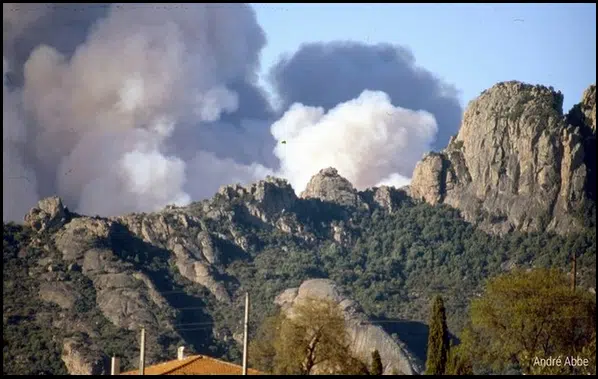
We were in the middle of harvest on Saturday afternoon when the fire reached the top of Saint-Martin and my grandfather asked us to tidy everything up to join the Vernède...
33 years... but it was yesterday in my memory!

- Writing Passadoc – Participants included:
André Abbe
François Abbe
Olivier Ciamous
Jeanne Monin
Giselle Penat-Lorde - Layout
Jeanne Monin