


The weekly 126
The ball...
He is king of stadiums, beach games, school classes, village squares... It is everywhere present and on all continents. Here's some of his story.
It seems to appear in China. It's all there that we find the oldest trace with this simple rule: several rival players push the ball from the foot to get it into a defined area.
During the Tang Dynasty (618-907), the ball is a simple animal bladder covered with leather. It changed somewhat during the Song Dynasty (960-1279); It is then a leather pocket filled with various materials: most often animal hair and volatile feathers.
It seems... As other documents report it well before. For example, in the Maya (2500 years B.C.): the ball is made up of leather strips surrounded several times on their own. In the game, a little religious was mixed up.
A historian tells: It was not uncommon for the losing team captain to be sacrificed, which, you doubt, greatly spiced the game.
Big! Let's move quickly to more kind times!...
A small stop in the third century C.E. to signal a Sicilian mosaic representing a man throwing a bullet. Did he push from his foot? from his hand? Hard to say.
These are the medieval times when games – including bullet games – spread throughout all segments of society, among nobles and commoners, as well as among manants and villains.
In France, around 1150, appears a manly game where all the blows are allowed or almost: soule. The word is used from north to south: Picardie, Normandy, Brittany, Languedoc. And the game is mentioned in Renart's novel (1170-1250):
– Li vilein who's in a row...
In England, balloon games are extremely popular and the term « football » will quickly cross the Channel and invade the entire planet. We know the place he occupies today!
– Where is our ball?
Patience... here he is!
Jeanne Monin
Research on many sites.
André Abbe
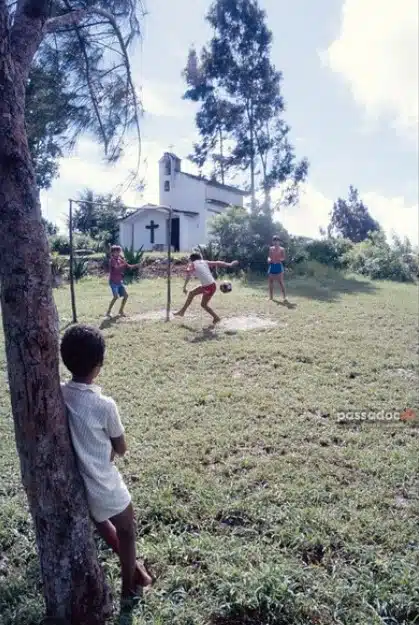
Looking for a picture of Brazil, I came across the last football game of my sports life, in 1990, with the children of the catechism of a parish in the Nordeste.
The terrain was bumpy, the cage was wanking.
I take this opportunity to pay tribute to King Pelé who left us last December.
This is I believe the first and certainly the last time I will evoke football in our lines. Still beaten in the European competition, the billionaires of the PSG made the French championship uninteresting by overriding it outrageously. Brazilian star Neymar Junior plays in intermittent attack.
I am still supporting the Nice GOC, which has a much smaller budget.
As a bonus, my friends from Corou de Berra come to the lawn before the game sing « Nissa the bella« Viva!
- The Echoes of the Week
In Corsica
The Var Reeds
Earth Lion and Sea Lion
The Sorgue - Participate in « The Gazette » Hey!

In Corsica
André Abbe
Recent « comunicato stampa » a museum in Vintimille, announced that from 16 to 18 June would take place « European Archaeology Days »
For a long time the excavations have made it possible to make discoveries but archaeology reserves fewer and fewer surprises. Many sites were discovered by chance.
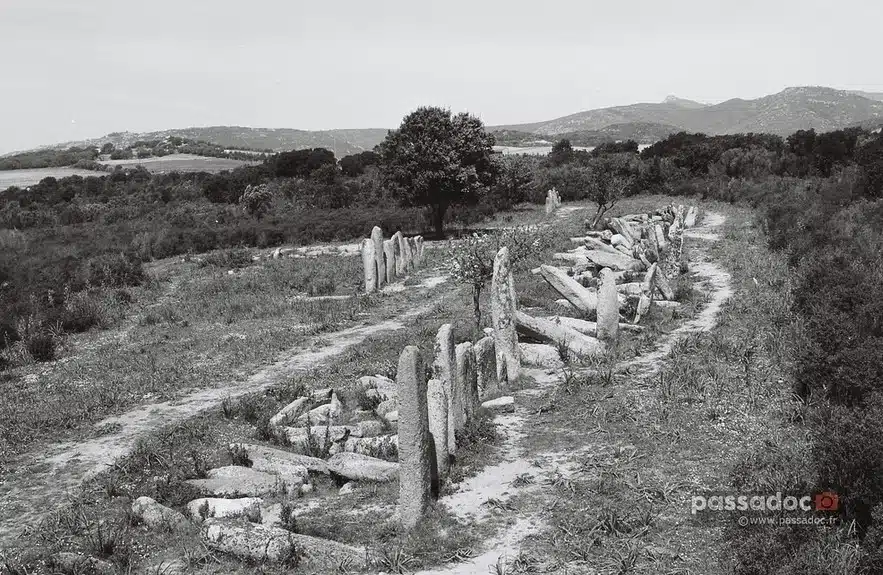
To bring my stone to the building, here is a picture taken in 1984 of the extraordinary site of Filitosa in South Corsica.
Corsica is located in « Space Passadoc » But we're too rarely talking.
In this case you would be surprised by all the surprises we discover every week in France!
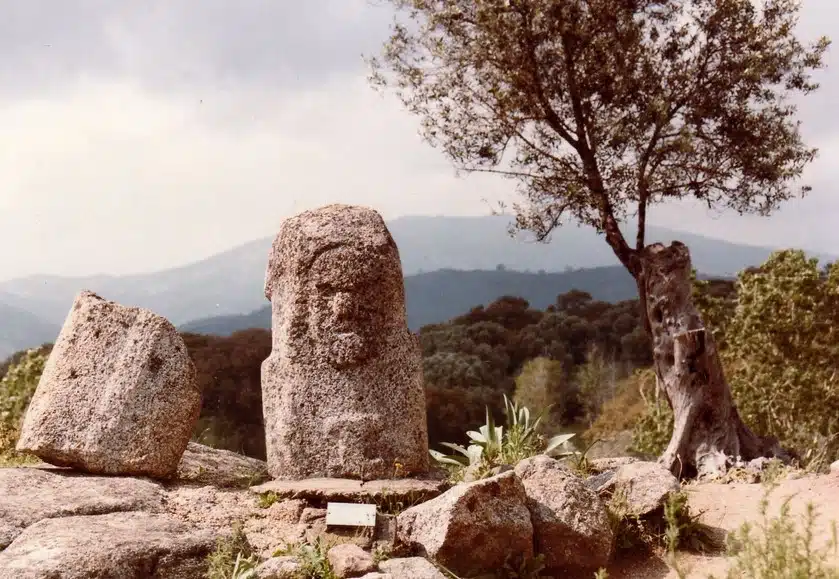
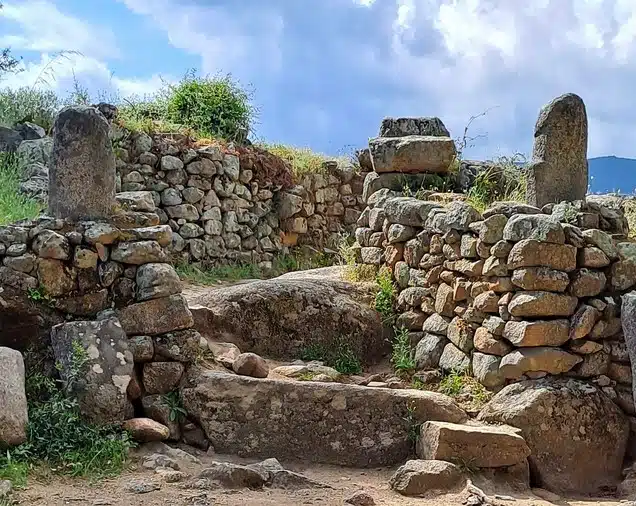
Photo Guy Bouyer
Photo Jean Paul Dubroca
The Var Reeds
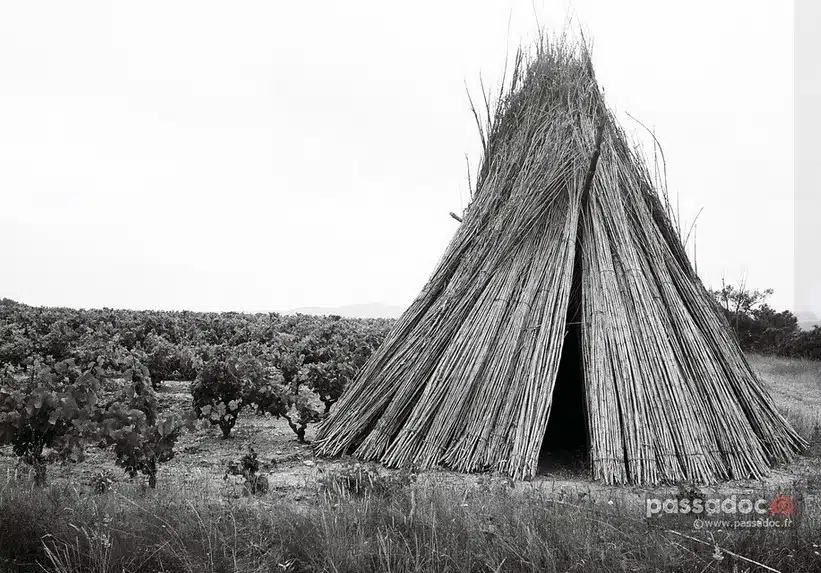
The Var reed has a worldwide reputation.
There's no better way to allow the top-quality water-shaft size:
– Simple saxophone and clarinet anches.
– Double anches of oboe and bassoons.
That's how it was when I made a report on the subject about thirty years ago. I don't know if our canes are still the world's top quality.
André Abbe
We had « Canaries » along the banks of the Argens at the Vergers/Roquebrune-sur-Argens, which were cut regularly, as far as I can remember, by workers, « Canners »which came from the region of Brignoles. This in the 1950s and early 1960s. I think that the exploitation of these canes disappeared afterwards.
But all our cannons on the edge of Argens have survived. My father and brother maintained them so that the canes would not invade everything. These plantations strengthened and stabilized the banks bordering the Argens. We used them as guardians in tomato, beans, etc. Manufacture of cans as well.
I've always heard « Cannier » which designates both the place planted with canes, reeds – it is also called a cannaie – and the cane manufacturer, or the craftsman who weaves the canes for the manufacture of chairs and makes the cannages of furniture – unless I am mistaken or confused!
Depending on the dictionaries, the spelling can vary: one finds canier with a N, as for cannisses or canisses. The canner that weaves the chairs (remote) is also named a canner.
Guy Cavatore
In Bormes-les-Mimosas, the Van Doren establishments manufacture wind instrument anches, renowned worldwide, from the canes of Provence.
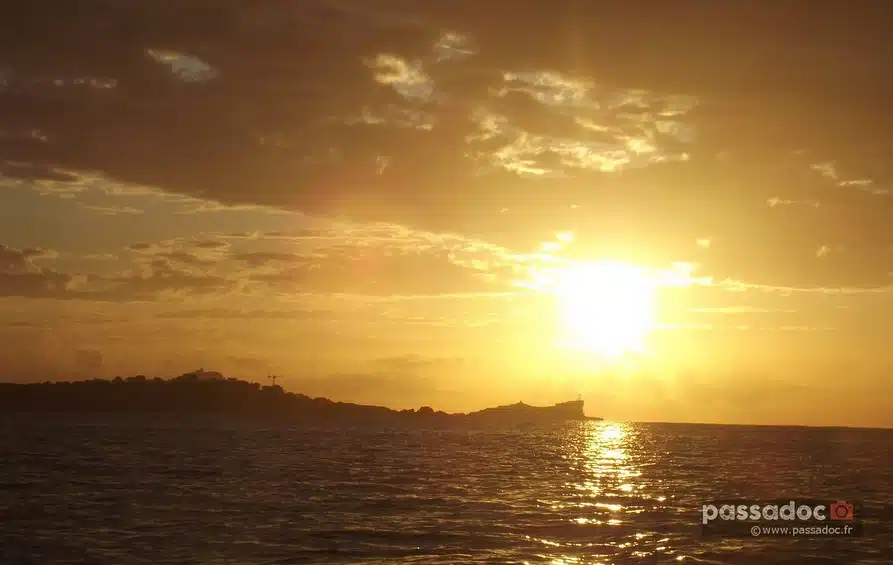
Land lion and sea lion
The Sorgue
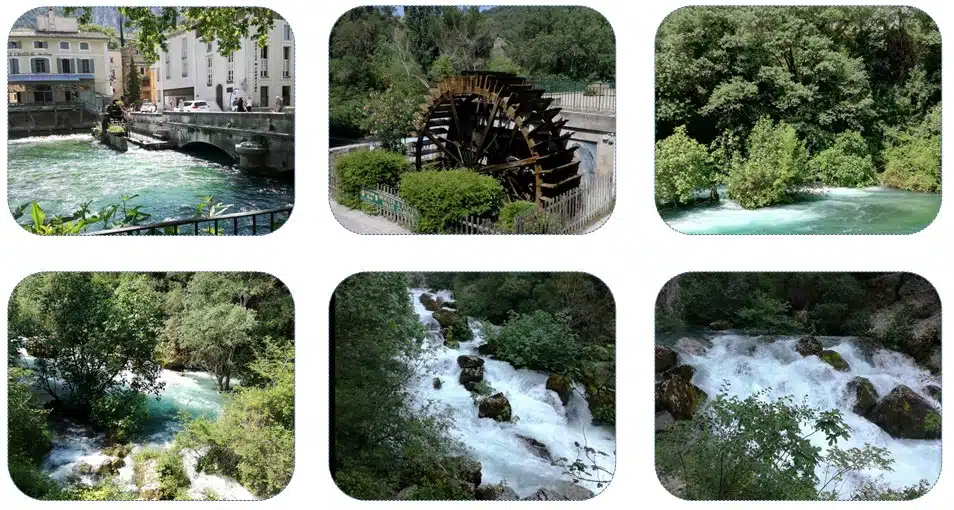
I had never before had the opportunity to see the resurgence of
the Sorgue in Fontaine-de-Vaucluse.
It's really grand...
Video Claude Boyer


- Writing Passadoc – Participated (texts and photos):
André Abbe
Mathieu Baiget
Guy Bouyer
Françoise Delpoulle
Jean Paul Dubroca
Dany Eysseric Combe
Marie-Dominique Germain
Georges Lorenzelli
Jeanne Monin
Jean-Jacques Murat
François Nadou
Giselle Penat-Lorde - Layout
Jeanne Monin