Passadoc Gazette – No. 106

The weekly 106

Lavender
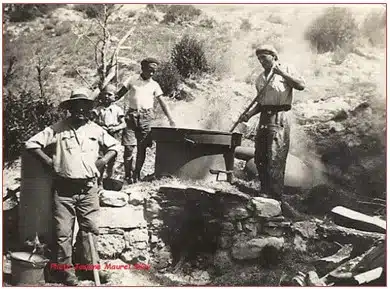
Photo: Josiane Maurel Silvy

Lavender in Provence

For centuries, it has been part of the rural economy.

In Rome, naturalists rank it among the « precious plants ». In the Middle Ages, it is used to fight infectious diseases (the plague); It is part of the « Good herbs »The ones that treat.

Lavender is not a demanding plant: on dry land, it grows alone, without the help of peasants. It is collected by women, children, and its sale brings a very small income to poor families. Its culture will intensify when perfumeries develop (in Grasse in particular).

Little by little, it will cover the hills that border the villages... and will appear the first stills.

– And our Provencal lavender in all this?

Patience... She's coming.* Hey!

Marie-Odile Beraud says:

In the 1930s, on the town of Tartonne (Alpes-de-Haute-Provence), there was a small distillery...

After harvesting the lavender with the sickle, the pickers with the « saquette » (sack of canvas which they wore in shoulder straps), placed the sheaves cut, as and when. Once « the saquettes » the lavenders were deposited either at

edge of the field, either near the farm to dry.

After 2 or 3 days, they took the direction of the alambic. The sheaves were then placed in a tank, over a wood fire, continuously fed. The steam was rising, walking into the coil where it gradually cooled... Then, drop by drop, at the end of all this, came out lavender flower water.

I knew this but the alambic was more modern than that of the photo. Sage or lavender flowers were distilled in the beautiful season. If the lavender was embalming, it was not the same as the sage that felt strong to me: its smell remained on the clothes, in the hair, on the skin. I preferred lavender by far.

In the photo, lent by Josiane Maurel-Silvy, we see the famous still of the Riou; The little boy with the beret is my dad and next to Josiane's. It was in the 33-34s.

* Research in various articles: Jeanne Monin

  • The Echoes of the Week
    The Minerva no longer responds
    February 1956
    Expo. Photos...
    Ibex
    Wind
    The Chandeleur
    Lemon Party

  • ... and at Abbe-Photo

  • Participate in « The gazette » Hey!


  • The Library of Passadoc

Claude Boyer

The Minerva no longer responds
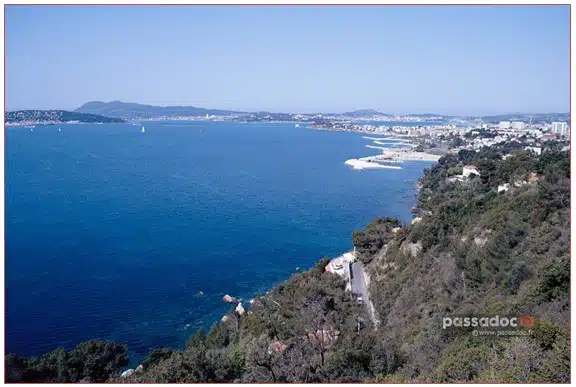
We all remember this tragedy that took place off Toulon.
Back 55 years back...

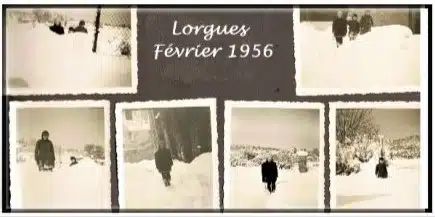
February 1956

I was born a year later but my parents told me:
– 1956 remained in memory. That year, all of Europe trembled in an unprecedented wave of cold.
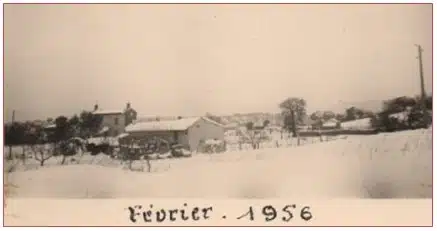
 
Provence was not spared, three waves of cold swept over the region, accompanied by abundant snowfall and a violent wind.
A mistral was observed with peaks at 180 km/h in the Rhône valley; and on 11 February, at the peak of the episode, more than one metre of snow was found in Saint-Tropez.
 
It all started on February 2 after a month of January that had been quite sweet. The second wave arrived on the night of 9-10, accompanied by violent winds.
 
Railways and roads are impassable, there are no more accidents and roofs collapsed under the weight of snow, water pipes have not resisted freezing, electrical and telephone poles are on the ground.
 
The Rhone is full of ice, the ports are covered with ice and the Mediterranean starts smoking because it is warmer than the atmosphere; There are several deaths due to the cold.
 
In short, all economic activity is at best slowed down, at worst at a complete halt.
Photo Claude Boyer
After a few days of light reediness, hoping for the end of the episode, the third wave arrives on February 19; with it still falls a thick layer of snow.
 
On the 24th, several hundred localities in Provence are still isolated, including Draguignan, the Var prefecture, and the peninsula of Saint-Tropez, whose villages are refuelled by helicopter. Sometimes, because of a lack of supply, bread is beginning to run out.
 
The vegetable or floral horticulture is destroyed... Olive trees bear a dry and short-lived cold, but not the wet and long-lasting one of this month of February. They burst under the effect of frost, because the sap began to rise. The cold of 1956 accelerated the decline of olive growing, which had begun for a century.
 
The thaw will really only begin on 26 and several weeks will be necessary for a normal life to resume.
Some damage will later appear, such as the destruction of sea pines in the Moors and the Esterel, killed by a cochenille whose natural predator – the ladybug – did not resist the cold. This month of February is the month of temperature records in Lower Provence with – 15 to – 18° recorded in the center Var and – 7° in Porquerolles.
 
For the region, 1956 remains the coldest year it has known. With the death of the olive trees, it is a part of rural Provence that has gone.
Let us hope that this month of February which begins does not leave us with the same surprise.
 
Pétoune Lorgues
– Yes what year!!! I remember: my father who had the butcher shop, had made a « cut » from the road to the entrance of the trade so that people can come to supply. It was spectacular and at the same time catastrophic. It will always remain in our memories.
 
Sylvette Escolle
– My mother also told me she broke the ice at the washing room so she could wash the laundry.
 
Photo Momo dela Etdici

Alain Dirassouvan
– My mother told us that the snow was higher than it was once the passage was made to enter the houses of the village; It was the year of his 16th birthday.

 
Yves Massa
– I was 6 years old and the snow was higher than I was in Roquebrune!
Giselle Penat-Lorde
I was five...
I've got a burning memory of being eaten by hands and feet, because I loved going into the garden and tripping the snow and not necessarily with my mittens, anyway in wool and very quickly wet! Nor were the shoes very suitable or suitable for such snowfalls!
 
I was entitled to cures of the famous sterogyl prescribed at the time – a medicine that still exists because vitamin D/Ergocalciferol (vitamin D2).
 
The east flow brought back the iced air of Siberia and the French Riviera covered a thick snow cover for nearly 3 weeks. We literally fell under the snow.
 
My brother was in the technical high school in Lorgues, where all the pipes frozen, the wooden stoves were largely insufficient to heat everything – no electricity either, an old generator took over more or less – I think the director had had to send the interns back or arrange with the families, because difficulties on the roads to come and get the boarding staff. No better for the 1/2 residents.
 
The olive trees exploded, yes, like grenades. « The olive trees wept » – the woods of all the trees with mimosas that gave the impression of a hurl, especially since January had been relatively soft and it was not uncommon to see almond trees in bloom.
Crops destroyed everywhere – all trees were somehow « Crucified » on site, including olive trees.
 
The glacial mistral, which had been intermittently blowing at 80-100 km/h, of course, accentuated the cold and caused impressive congers.
Yes, this month of February has remained in the annals.

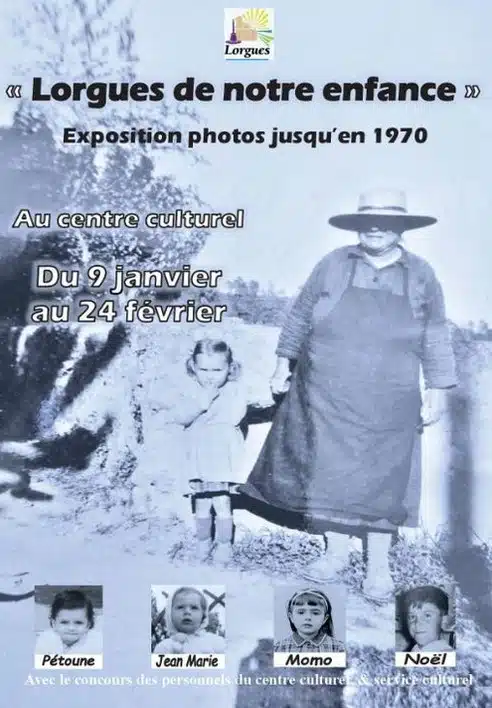
In Lorgues : photo exhibition

 
A desire to get back into your life
In the life before?
 
Until 24 February,
visit the exhibition
old photos
at the Cultural Centre of Lorgues
 
Republic Courses.
_____________
 
 
Passadoc is all the more willing to support this demonstration that it has itself given itself to preserve the testimonies of the past.


André Abbe

Ibex

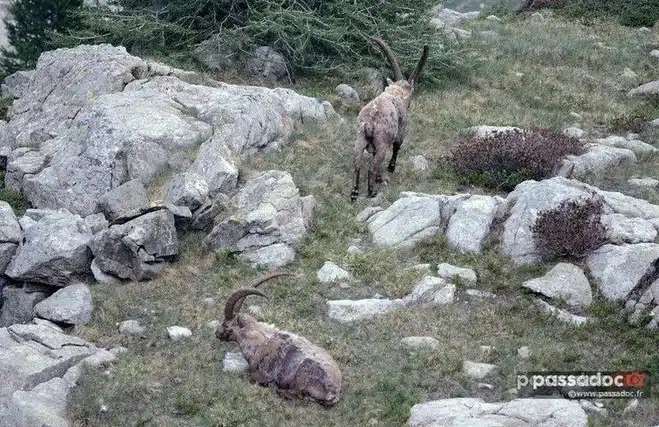
In June 1981, I had photographed these bouquetins in Mercantour. I didn't have a telephoto lens, I was approached less than 10 meters away, not fierce. They did not (yet) have predators at the time.
The reintroduction of the bouquetins had succeeded. It is reported that the population is declining due to wolf attacks.
 
Marie-Odile Beraud
Yet in 1979, in the Mercantour Park, there were 30 bouquetins. By 2021, they were 1800...
 
Jeanne Monin
Predators? Wolves of course! Since the dawn of time, they have frightened the countryside and the little ones because they eat the grandmothers and lambs who defy themselves in the flow of pure waves. They are the ones who slaughter the sheep!
 
Only that's incorrect. : the wolf only hunts for food; its prey is consumed within hours of capture. In fact, it is the stray dogs that must be criminalized, they are the ones who hurt, kill the sheep and lambs of the pastures.

Wind

It is often believed that old tools or agricultural machinery that can be seen in museums of popular traditions or found in dust sheds, have not been used since the year pebre.*
That's not true...
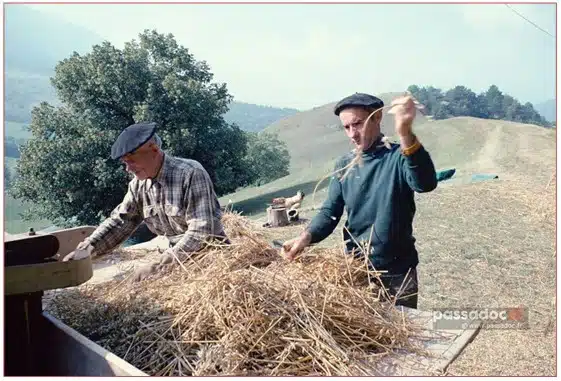
A ventary (or ventarello), in French "tarare" allows you to valve the cereals, to separate the grains from the straw.

* A long, long time ago.
Photo André Abbe
I just found one of my pictures taken in 1989 at the Vernet (Alpes-de-Haute-Provence). Mr Lombard and his son Guton (now a friend) boasted their oats with their ventar... Ventaire is also, in Provençal, the name of the person who does the work.
 
The Lombards were not demonstrating for the photographer's needs! They were bragging their oats to feed their horses (sheep are fed barley).
 
The horses are at home in these middle mountain countries, between Digne and Barcelonnette. Not far from the Vernet, in Seyne-les-Alpes, mares were raised which, mounted by donkeys, gave birth to mules, which after being trained, were sold throughout Provence.
 
A little slang:
About oats... In French "Having wheat" is to be rich. In Provençal, to be rich is "civada ware", having oats. Civadier or Sivadier (producer or salesman of oats) is a family name.
Jean-François Sivadier is a theatre director that I don't particularly appreciate. I suffered, spectator, at one of his stages, "The Life of Galilee" of Brecht.
... I came out of the subject again!


Jean-Jacques Murat
– Cresiáu que, la civada coma lo blad, èron d'en premier batuts, caucats per desseparar leis espigas de la palha, avans que lei ventarelas (« tararo » coma lo cantava Peire Pascau dins « the cavalo ») desseparan lei grans de son envelopa (balle en france-mand) ; This is the first time that tijas totei enteas passar dins la ventarela.

[I thought that, oats like wheat, were first beaten, trampled to separate the ears from the straw, before the tarars separated the grains from the ball; This is the first time I've seen whole stems pass through a tarara.]

The chandelier
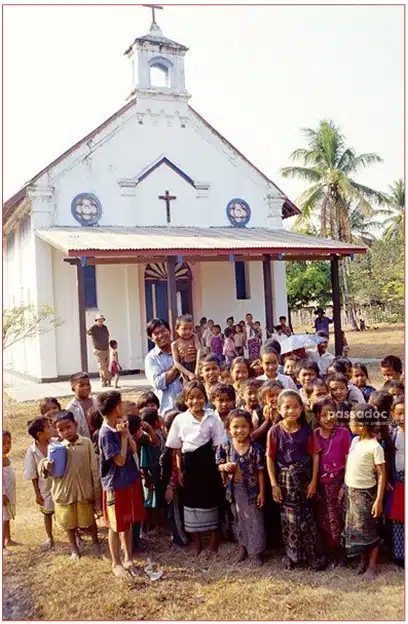
On February 2, as every year, 40 days after Jesus' birth, it will be the candlestick.
Don't ask me why they make pancakes on the anniversary of their presentation at the temple. Someone among us must know...
 
This date announces the birth of Christianity. The early Christians had been persecuted. In 2023, an estimated 370 million Christians were persecuted in the world, especially in Africa and Asia.
 
Sugar pancake and grieving pancake... The two words are similar, one is feminine, the other masculine. Surprising chance of the French language!
On February 2 I would wear the pancake if I had the opportunity to find one in the trade.
 
2001 - Laos: Catholic children in front of the village church - Photo A. Abbe

Claude Boyer...

2008... I am in Bougoukouroula, a bush village in Mali, not very far from the border of Burkina where our NGO financed the construction of two classrooms, the digging of a well and latrines for the school.

Since the reception structures were non-existent, we were staying at the cure of Father Ky where some missionary cells from the time of colonization remained, i.e. a metal bed between four walls, a door and a window; « the cabin at the bottom of the garden » was the toilet where one slept after pulling water from the well.

While Father Ky celebrated Jesus' presentation at the Temple on that day of Chandeleur, I made pancakes for the children of the village.
– Make pancakes... It's nothing extraordinary. Hey! Tell me,
But if I planted the decor by writing this preamble, it is that while Christian mothers attended Mass, Muslim mothers made pancakes with me. Once the office was over, Muslims and Christians gathered at the cure for an afternoon of songs and dances to the sound of djembés and balafons.

– Nothing good Provencal in this comment!
It's true, but the photo of André m The period we are going through right now would be a good idea.

André Garcia... a little history...

Like Christmas, Epiphany or Assumption, Chandeleur celebrates each year on the same date; i.e. 2 February. A date that is not chosen at random since it corresponds to a very special event in history.
 
Celebrated on February 2, the Chandeleur commemorates the presentation of Jesus at the Temple in Jerusalem. Mary and Joseph, doing this gesture 40 days after the birth of their first-born, thus perpetuate a Hebrew custom.
In the past, the Purification of the Virgin Mary was also celebrated. « lifts » of the mother, following her delivery.
 
Upon their arrival in the Temple, Mary and Joseph met an old man named Syméon who took the child into his arms. He blessed him by saying:
– Now, O Master, you can let your servant go in peace, according to your word. For my eyes have seen your salvation, which you have prepared in the face of all peoples: light to enlighten the heathen nations, and glory of Israel your people.

 
The feast of the Chandeleur is therefore associated with the light, it also holds its name from the candles that the faithful wore during the processions that took place in Rome. It was Pope Gélasus I who decided to institute him to fight against paganism. The first took place in 472.
 
At the time of the spread of Christianity in the Roman Empire, pagan festivals are still very much followed. They must be taken into account by the Church. The Chandeleur thus replaces the Lupercales, feasts in honor of Lupercus, god of fertility, which took place around 15 February.

But then, why are pancakes eaten at Chandeleur?

From the Lupercales, to celebrate the end of the year, candles were lit at midnight and cereal cakes were eaten to invoke the return of the sun. Round and yellow, pancakes and pancakes resemble the solar disc.
 
When Pope Gélase I introduced the Chandeleur, he distributed cakes – easy to make – to the many pilgrims who arrived in Rome. In addition, the pancake is made with the excess flour from the previous year's harvest and is a symbol of prosperity.
 
Several traditions are associated with it, such as blowing up the first pancake of the right hand by holding a golden louis (or a piece) in the left hand. Some, especially in the Southwest, even place the first pancake at the top of a wardrobe to ensure happiness and prosperity at home all year round.
 
If they were originally made from a mixture of flour and water, pancakes today have many flavors. Used for the big brands to sell sugar, spread pasta, jam... what to do with nutritionists and dentists!


Proverbs...

If the Chandeleur is clear,
There will be two winters in the year.

On the eve of the Chandeleur, winter is lost or takes effect.

Lemon Party

In Menton, the Lemon Festival takes place at the same time as the Carnival of Nice, it is easy to attend both events.
Mentonnais do not hide from it: not all the lemons at the festival were picked in Menton; Many come from Spain.

However, there is a high quality local citrus fruit production available on the daily market: lemons, oranges, clementines and cedrats. I hope it lasts... Land pressure is very strong. Orchards are highly coveted by developers.
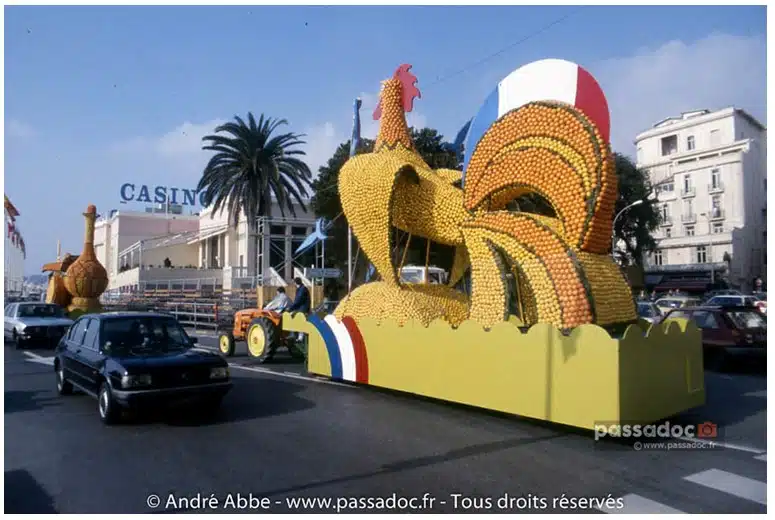
Giselle Penat-Lumb
I have beautiful memories of Lemon Day in Menton. My brother's godfather, who lives in Menton, invited us almost every year to the Citrons' Day, always a great show. And we were going home with citrus clots, bought directly from producers that our good sponsor Jean knew from his commercial activities at the time. On the way for a good week of cooking with the battery of cauldrons: jams, jellies and various preparations. Always a treat!
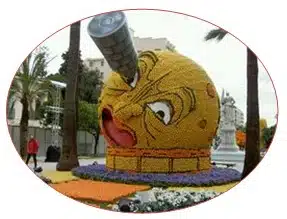

There were, yes, quite a few citrus producers in the 1950s/60s, who were not yet under this overstretched land pressure. The threat came slowly...
 
The history of Menton farming is also very interesting. It began in the middle of the 15th century. The Golden Age of Lemon lasted about a century between 1740 and 1840. Trade was very flourishing and mainly export oriented.
I attended my last Citron Festival, a few years ago already, in 2010, with German-Helvetico friends who were staying in Italy and who had not wanted to miss the Citron Festival, being on the side of San Remo. We had a great day there. The theme of the celebration that year was « Menton makes his movie » Unless I'm wrong.
 
Splendor of all the decorated gardens: Bioves gardens with the traditional giant motifs whose construction requires every year thousands of citrus fruits for a total of 145 tons. Hence of course the import of lemons and other citrus fruits from Spain and Italy

Last Thursday, « Gazette No. 105 » informed the conferences of André Abbe in Correns: photo projections and comments first in Provençal, then in French, twice 90 minutes. Nice performance!

And a smile with that « recipe » Occitan boy!
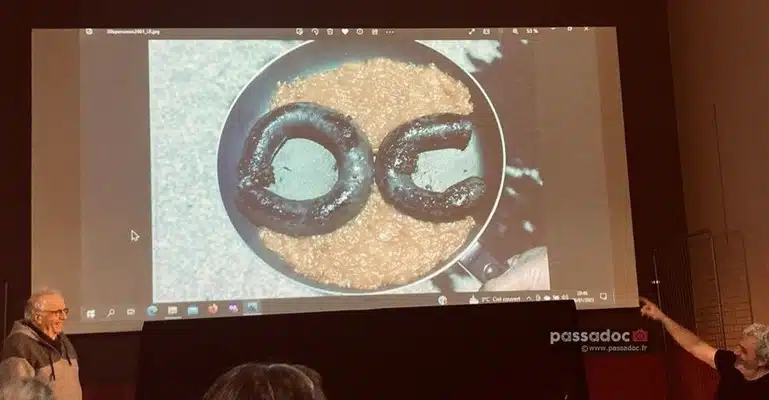
Photo Miqueu Montanaro

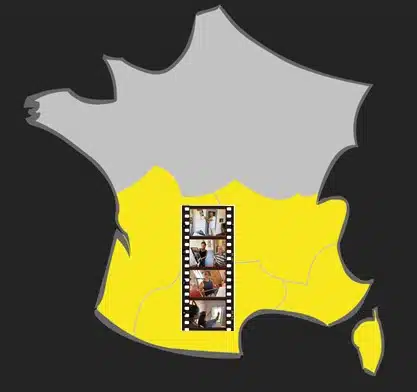
You have pictures of the regions of:

  • Auvergne-Rhône-Alpes
  • Corsica
  • New Aquitaine
  • Occitanie
  • Provence-Alpes-Côte d

Anyway... You have all the south in pictures!

In your drawers, you keep old postcards... You have anecdotes to tell, stories to share, travels to tell... Passadoc is waiting for you!
Send your documents safely:

romenzo2010@gmail.com

Depending on the subject, they will be published on Passadoc, or on Abbe.Photo and perhaps in « Passadoc Gazette »
It's better than drugs!

The PASSADOC association is recognised as being of general interest. In keeping with the privacy and confidentiality of each individual's personal data, it retains the names, telephone numbers, emails and addresses of its contacts for its own use. These data are never communicated to third parties. More info on www.passadoc.fr


  • Writing – Passadoc – No 106 was attended by:
    André Abbe
    Marie-Odile Beraud
    Claude Boyer
    Sylvette Escolle
    André Garcia
    Pétoune Lorgues
    Jeanne Monin
    Jean-Jacques Murat
    Giselle Penat-Lorde


  •  Layout
    Jeanne Monin

Passadoc